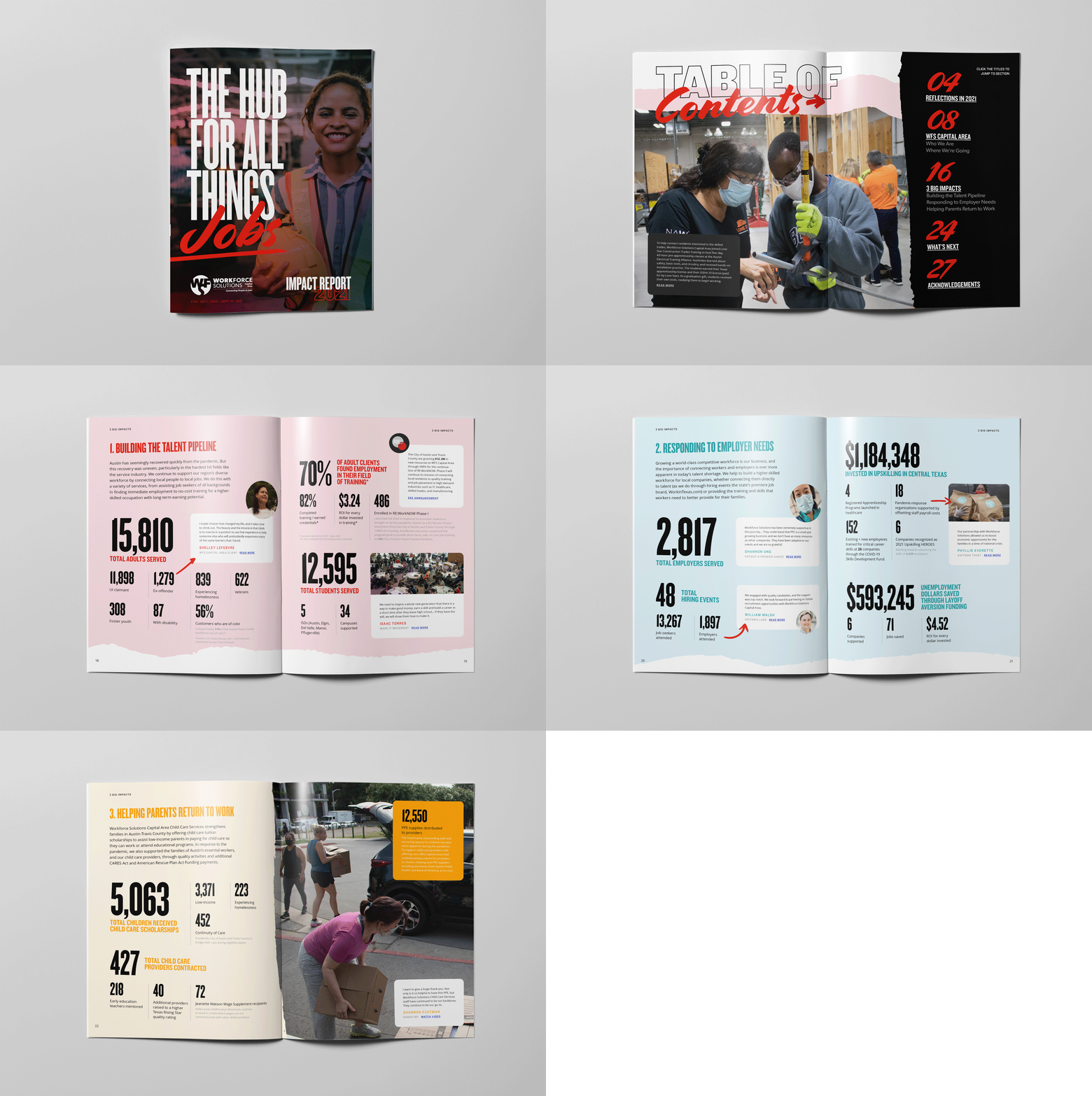
This report details closure rates among providers in Travis County, as well as ways Workforce Solutions Capital Area supported the families of Austin’s essential workers and our child care providers through quality initiative activities and additional CARES Act funding payments.
Category: Reports & Insights
-

2020 Impact Report
In 2020, Workforce Solutions Capital Area became the first responder for employment.
In a matter of days, a declining unemployment rate that had lasted for years spiked into the double digits due to the COVID-19 pandemic. Workforce Solutions quickly pivoted to a virtual space to assist all impacted members of our community—students, workers, parents, businesses and more—in a safe and effective way.
The Austin metro area is now one of the fastest recovering in the nation, with many industries experiencing job growth. Our hard work and our partnerships help to make it possible.
-

How MoboTrex Leveraged the Skills Development Fund to Train Supervisors at No Cost
To help build a highly skilled workforce in Texas, the Texas Workforce Commission (TWC) offers programs like the Skills Development Fund (SDF). This upskilling program provides site-specific, customized training opportunities for Texas businesses and their employees. In 2020, TWC launched the SDF COVID-19 Special Initiative to provide companies rapid training as the workforce shifted. One company seeking to increase skill levels and wages with the SDF Special Initiative is MoboTrex.
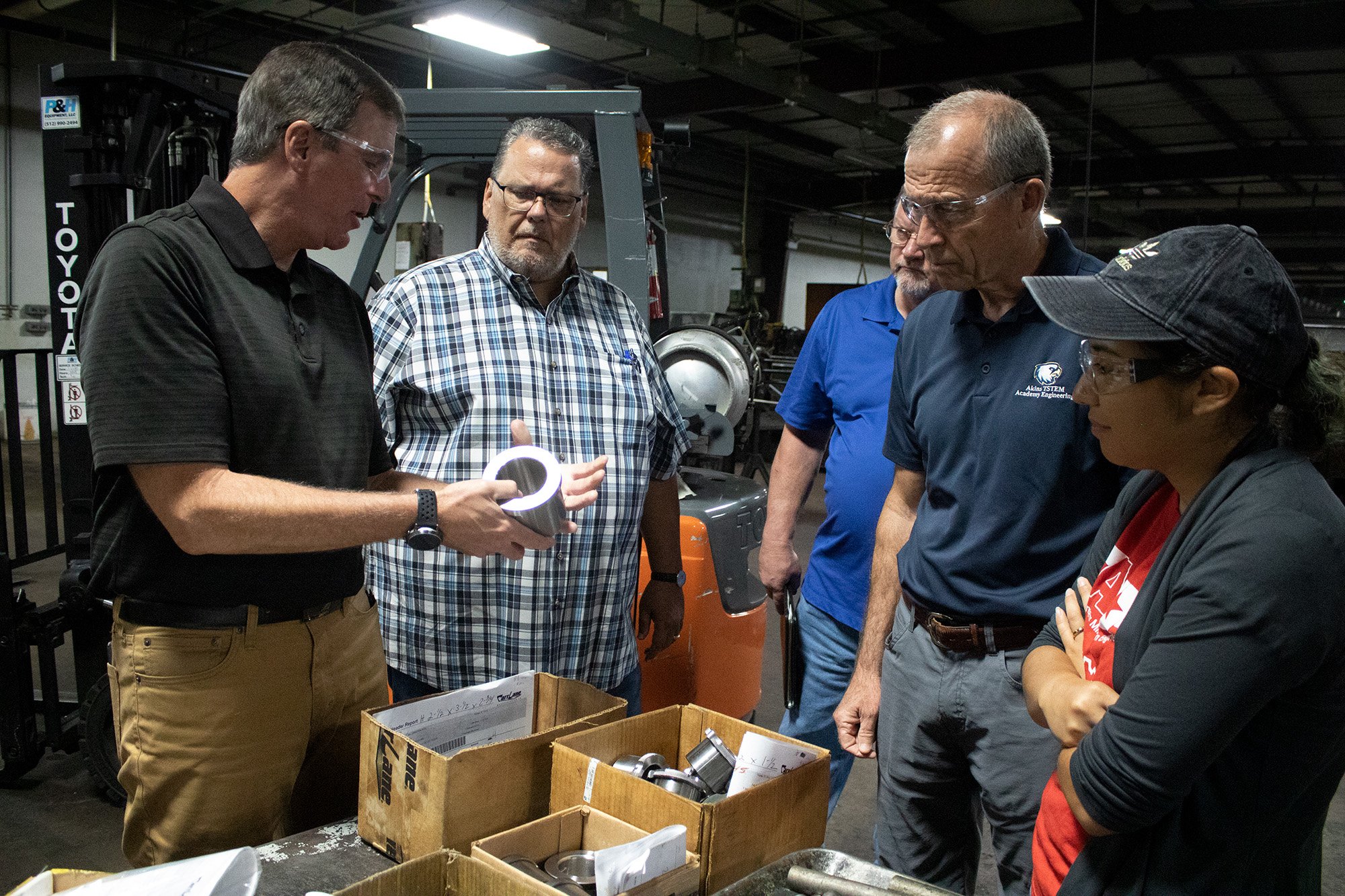
MoboTrex is a manufacturing and distribution company for traffic control products. The company is headquartered in Iowa and has facilities around the country, with the primary manufacturing facility in Austin. At this location, MoboTrex builds everything from traffic and pedestrian signals to cabinets for electronics. More than 100 people work at the Austin facility.


Leveraging SDF for virtual supervisory training
In 2020, MoboTrex applied for a Supervisor Training grant through SDF, with assistance from Workforce Solutions Capital Area and Austin Regional Manufacturers Association. Four employees graduated the training in February 2021. MoboTrex values internal training and continued to offer it to employees despite the challenges of the COVID-19 pandemic, according to Staci Lange, Chief Operating Officer.
The doors for this opportunity first opened in fall 2020 when Staci was contacted by Amber Warne, Director of Upskilling and Advancement for Workforce Solutions Capital Area.
“Our busy season had just wrapped up and I thought this was great because we have a number of workers who can use this training,” Staci said. “We had stopped training when COVID19 hit, so I asked if we could do this later. Amber said yes and set it up. She was very helpful with the forms and made this a seamless process.”
The trainer contacted Staci to help schedule the training and prepare all materials in advance. “Initiating a training usually requires more administrative overhead, but this was seamless,” Staci said.
Upskilling teams at no cost
The supervisory training was held virtually over eight weeks—four hours a day, two days a week by Southwest Research Institute (SwRI) Texas Manufacturing Assistance Center (TMAC). Topics included how to manage employees and what operations supervisors need to know day-to-day.
“The feedback I got from those who participated was positive,” Staci said. “They said they learned a lot.”
The pandemic had forced businesses like MoboTrex to pause employee development initiatives like supervisory training, but with SDF and assistance from Workforce Solutions, the initiatives could resume.
What would MoboTrex have done if this funding wasn’t available?
“We probably wouldn’t have been able to offer the training. We have a nice training facility onsite, but we shut down most of our training for social distancing,” Staci said.
“If you don’t have internal resources, or due to COVID you can’t use them in a regular manner, then the remote nature of this training will be particularly helpful. If you are onboarding your supervisors and they need training, then it is something to look at,” said Staci.
“So much of our training is an interactive process. We want to grow and develop our employees, not just check off a box,” said Staci.
“If other opportunities to upskill our team at no cost present themselves, we are definitely interested in pursuing them. We appreciate the offer: it was well received and a well-done investment.”
Upgrade your workforce’s skills with Workforce Solutions Capital Area
Is your organization seeking no-cost opportunities to sharpen your workers’ skills? Workforce Solutions can help! Visit our Employee Skills Training page to start and download your copy of the Upskilling Toolkit to learn how upskilling your employees can help develop your talent!
-

How Austin Creative Reuse Kept Their Center Open and Staff Working During the Pandemic with Layoff Aversion Funding
When the COVID-19 pandemic swept into Austin in spring 2020, local businesses small and large were impacted. Many businesses closed their doors, but others sought support to continue operations and keep their people working. One of these businesses was Austin Creative Reuse (ACR), a nonprofit with a mission to foster conservation and reuse through creativity, education, and community building.
ACR operates a creative reuse center in East Austin, selling gently used creative materials donated from residents and businesses. ACR also offers workshops to educate Austinites about reuse and helps promote local artists, said Jenn Evans, Executive Director.
“Just as the pandemic hit, we expanded into a new location in the Windsor Park neighborhood,” Jenn said.
“I attended a webinar hosted by Mission Capital in the early days of the pandemic, where Amber Warne, the Director of Upskilling and Advancement at Workforce Solutions, spoke about Rapid Response programs for employers,” said Jenn. “I reached out after the event, and Amber and several of her colleagues were kind enough to meet with me to discuss ACR’s immediate needs.”
Most of ACR’s employees are retail clerks, an occupation with limited work-from-home options. The Board of Directors committed to paying all staff for the hours they would have worked during the closure with the organization’s emergency funds, but those funds were quickly depleted.
ACR applied for and received Layoff Aversion funding, which “allowed us to make the investments necessary to safely operate a small retail business in the time of COVID,” Jenn said. “These investments keep our staff, customers and donors safe. Reducing the risk of exposure also increases the likelihood that, once opened, the center will be able to stay open.”
“ACR would like to extend our deepest thanks to everyone at Workforce Solutions Capital Area.”
Jenn evansWith funding in hand, ACR purchased sanitization supplies and services to maintain a safe environment for staff and customers, equipment like utility carts and bay door screens for safe and contactless collection of donations, and technology to allow more staff to work remotely.
ACR also purchased equipment to expand a new online store and launch sidewalk sales. This provided safe alternate means for customers to shop while ACR prepared to reopen the center, according to Jenn.

“Workforce Solutions Capital Area has been an amazing partner during this chapter. All Workforce Solutions staff – and Amber Warne, in particular – were deeply supportive in helping ACR to plan our re-opening needs and use the Layoff Aversion funds wisely and responsively to the ever-changing COVID environment,” Jenn said.
“Austin-area businesses and non-profits are lucky to have such a great local partner in Workforce Solutions Capital Area,” she added.
ACR reopened the interior of the center on August 20—after being closed for five months, their doors were open again.
“The Layoff Aversion funding allowed ACR to orchestrate a staged re-opening of our center that was both responsive to the needs of our staff and our customers and reflective of the developing risks posed by COVID-19 in Central Texas,” Jenn said.
“The funding allowed us to quickly pivot to alternate ways for our community to shop with us while the center was closed, such as sidewalks sales, personal shopping and our new online store,” said Jenn. “These new funding streams both offered much needed revenue and allowed us to get creative materials back into the community at a time when they were needed most.”

ACR is open four days a week and at significantly lower capacity, but sales are rebounding. Earlier in October, ACR celebrated the fifth anniversary of opening of Austin’s first and only creative reuse center.
ACR is also celebrating their growing workforce: “We hired our 19th staff member the week of October 19, up from 14 when we applied for the Layoff Aversion Program in May,” Jenn said.
With center sales as ACR’s primary source of income, reopening the center and generating revenue was the only path toward long-term viability of the organization. The Layoff Aversion funding allowed ACR to make the investments necessary to safely operate a small business in the time of COVID.
Without those investments, it would have been very difficult for us to reopen the center. We certainly would not have been able to hire new staff and would most likely have needed to reduce hours for existing staff or face layoffs,” Jenn said.
“ACR would like to extend our deepest thanks to everyone at Workforce Solutions Capital Area. This funding was instrumental in allowing us to keep our entire staff working during the five months that our center was closed to the public,” Jenn said. “We look forward to continuing to work with your team on upskilling, professional development, staff recruitment and more!”
Workforce Solutions Capital Area can assist Central Texas employers impacted by COVID-19
If you are a business or CBO facing a layoff or closure, we can offer outplacement assistance, layoff aversion strategies, and potential financial assistance at no cost. Visit our website to learn about resources to assist you in responding to economic changes related to concerns about COVID-19.
-

Austin Metro Area Community Workforce Plan Year Two Report 2018-2019
This Year Two report serves as a reminder of the success of the MCWP in the first two years of this multi-year project prior to unexpected impact of the pandemic, but it also affords an opportunity to think clearly through the mechanisms of change of the MCWP, to consider how and why the MCWP continues to expand by including additional training programs and colleges, the regional role of upskilling employees and why it fits so firmly within the scope of work of the MCWP, and to reflect on progress the MCWP has addressed in racial and ethnic disparities.
This report is organized into four sections. The first section describes the ongoing work of the implementation of the MCWP. The following section discusses the outcomes of the workforce system portion of the MCWP, first overall, by demographic characteristics, and then by agency. The next section discusses the role of upskilling in the region, its role in the MCWP, and outcomes for Year Two upskilling completers. The final section provides conclusions and recommendations, assessing the extent to whether set goals are being met while also thinking through the implications of meeting or not meeting these goals.
Read more:
-

Austin Area Technology Talent Labor Market Study and Strategy
Information Technology and the associated technology workforce are primary economic drivers in the Austin region, with a foundation of large technology stalwarts, a healthy community of startups, and the accelerating need for technology workers across all industries. However, the region’s talent pipeline is not positioned to meet the need for technology workers over the long-term. For every one graduate of an IT or computer science program in the region, there are five openings in technology jobs. In addition, the current pool of tech workers is not diverse; 77 percent of tech workers in the Austin region are male and 64 percent are white. It is clear that the region needs a larger, more diverse tech talent pool to sustain the long-term growth prospects of this key economic driver.
To address this challenge, Austin’s employers of tech talent will need to come together with the region’s talent development partners to align and “right-size” the tech talent pipeline.
The structure for collaboration will be in the form of the Capital Area Technology Workforce Coalition (CATWC), which will be a coalition of civically-minded employers of tech talent.
Click here to read the full report.
Click here to read the Austin Area Technology Talent Labor Market Study.
-

U.S. Conference of Mayors Workforce Development Council Best Practices
Leveraging Boards as Leaders in Reauthorization of the Workforce Innovation and Opportunity Act (WIOA) showcases how America’s workforce boards have leveraged the Workforce Innovation and Opportunity Act (WIOA) to improve operations and better serve businesses and participants.
The publication highlights best practice cities like Austin, Texas where mayors and workforce development leaders have successfully collaborated with officials in local, state, and federal agencies to advocate for and implement effective workforce development policies to prepare cities for the future of work.