Find a Job Now
Get support and connect with local employers.

Train for a New Career
Explore training for in-demand, stable careers.

Attend a Career Workshop
Build job-search skills through live workshops.

Attend Hiring Events
Meet employers hiring now.

Austin Infrastructure Academy
Careers in construction, transportation, and skilled trades.

Youth Services
Support for ages 14–24 to build skills, explore careers, and find work.

Veteran Services
Priority support and career services for veterans and their spouses.

Business Solutions
Hiring and training support tailored to your workforce goals.

Case Studies
See how local employers solve workforce challenges with us.

Host or Join Hiring Events
Connect directly with job seekers.

Major Events at a Glance
Explore upcoming workforce and industry events in the region.

Healthcare
Collaborating with industry leaders to grow the healthcare workforce.

Mobility & Infrastructure
Advancing talent pipelines for construction, transportation, and skilled trades.

Industry Reports & Insights
Labor market reports and insights to support workforce planning.

Labor Market Dashboard
Data on the regional labor force, employment, jobs, and wages.

Podcast
Conversations shaping Austin’s jobs, economy, and future.

For Parents
Access to affordable, high-quality child care and family support.

For Providers
Partnerships and resources to support quality child care programs.

Success Stories & Testimonials
Real stories from families and providers we support.

Category: Labor Market Reports

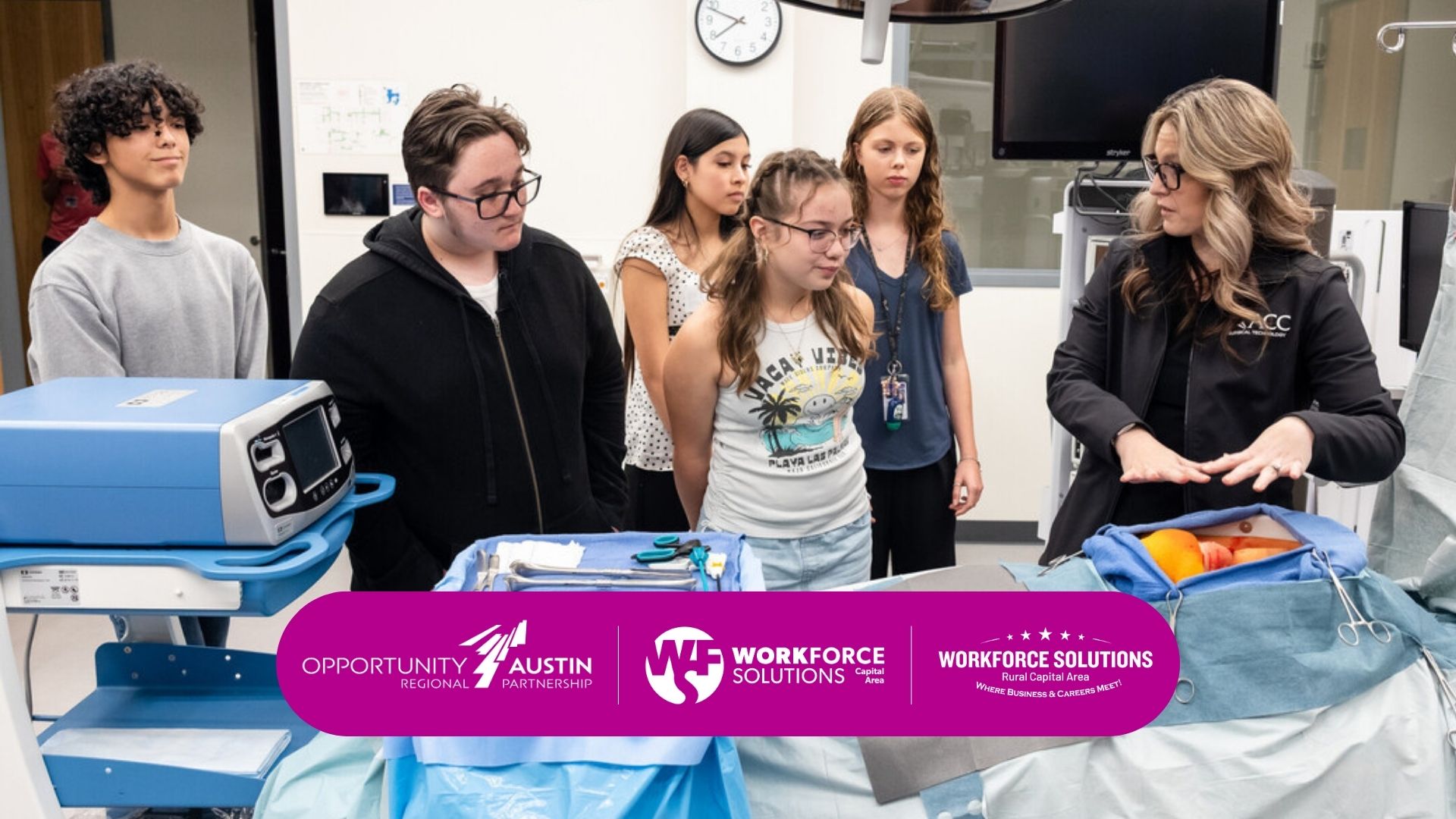
  • Aug 2026 Healthcare Snapshot, Austin Metro + Surrounding Counties

    Aug 2026 Healthcare Snapshot, Austin Metro + Surrounding Counties

    Healthcare remains one of Central Texas’ most in-demand industries, creating career opportunities across a range of occupations, education levels and wages. Meeting continued employer demand will require strong career pathways and coordination across healthcare employers, educators and workforce partners.

    Key findings from the report include:

    • More than 4,200 annual openings are projected through 2031 across six priority healthcare occupations
    • Registered nurses lead projected demand with nearly 1,500 annual openings, while nursing assistants follow with nearly 1,200
    • Many high-demand healthcare careers require a certificate or associate degree, with median annual wages across the six priority occupations ranging from approximately $38,000 to $94,000
    • Regional employers report hiring needs beyond published labor market estimates, reinforcing the need for continued collaboration to strengthen the healthcare talent pipeline

    Our newest Texas Talent Experts white paper—developed in partnership with Opportunity Austin and Workforce Solutions Rural Capital Area—explores healthcare workforce trends, in-demand career pathways and regional efforts to prepare the next generation of healthcare talent.

    Highlights include the Central Texas Healthcare Academy, developed by the Central Texas Healthcare Partnership convened by Workforce Solutions Capital Area, along with other investments in hands-on career exploration and healthcare training across the region.

    Read the white paper and learn how Central Texas is building the workforce needed to support a growing economy.

  • June 2026 Mobility + Infrastructure Snapshot, Austin Metro + Surrounding Counties

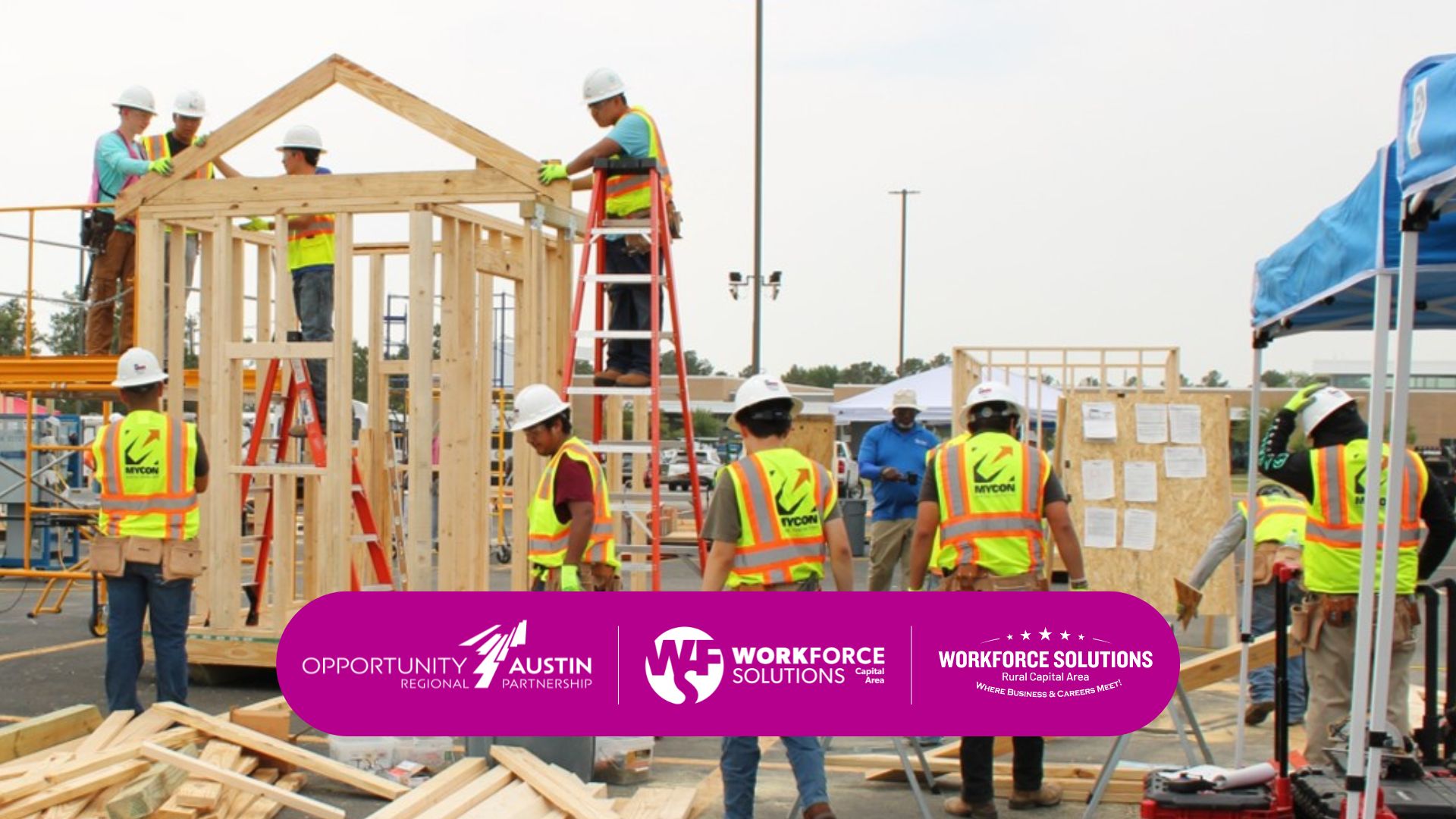
    June 2026 Mobility + Infrastructure Snapshot, Austin Metro + Surrounding Counties

    From major transportation projects to airport redevelopment and data center expansion, Central Texas is investing in the infrastructure needed to support a growing region. Meeting that demand will require a strong pipeline of skilled workers across construction, transportation, and the trades.

    Key findings from the report include:

    • Major infrastructure projects across the region require an estimated 10,000 skilled workers annually
    • Current training capacity meets only about 60% of workforce demand
    • More than 13,600 job postings in mobility and infrastructure occupations were recorded in 2025, with over 2,300 employers competing for talent
    • Texas ranks second nationally for proposed data centers, with 24 active facilities and more planned

    Our newest Texas Talent Experts white paper—developed in partnership with Opportunity Austin and Workforce Solutions Rural Capital Area—explores workforce trends, employer demand, and the strategies helping Central Texas build the talent needed to deliver critical infrastructure projects.

    Read the white paper and learn how Central Texas is building the workforce needed to support a growing economy.
  • Stackable Credentials in Career Connected Learning Efforts

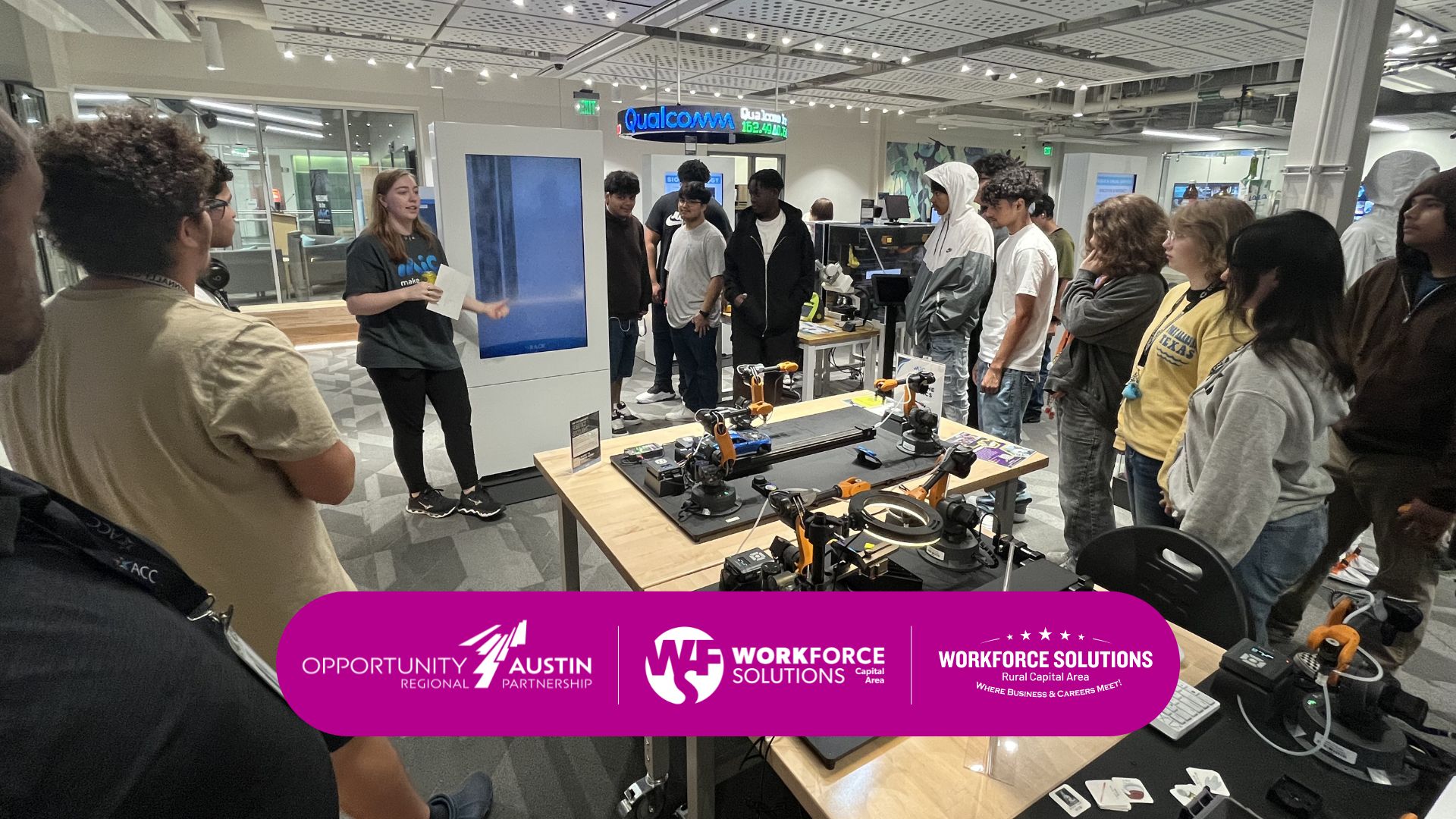
    Stackable Credentials in Career Connected Learning Efforts

    MGT’s new four-part report series explores how states and regions are redefining education-to-career systems: connecting students to meaningful, paid pathways that lead to economic mobility and meet workforce demand.

    The Stackable Credentials white paper explores how stackable credentials within Career Connected Learning efforts create flexible, employer-aligned pathways that allow K–12 students to earn industry-recognized credentials, enter high-demand careers, and continue advancing their skills over time to achieve long-term economic mobility.

    In Austin, the Central Texas Healthcare Academy created five stackable credential healthcare pathways beginning in high school.

    Read the report.

  • Feb 2026 Future Workforce Snapshot, Austin Metro + Surrounding Counties

    Feb 2026 Future Workforce Snapshot, Austin Metro + Surrounding Counties

    Across our 10-county region, more than 115,000 students are enrolled in industry-aligned, credential and degree pathways connected to high-demand careers.

    • 50,000 students in healthcare
    • 46,500 in STEM
    • 13,400 in semiconductor & advanced manufacturing
    • 6,500 in skilled trades

    At the same time, thousands of job openings across these sectors show just how important early career awareness, work-based learning, and employer engagement truly are.

    Our newest Texas Talent Experts report — developed in partnership with Opportunity Austin and Workforce Solutions Rural Capital Area — highlights how regional collaboration is aligning K-12 pathways with real workforce demand.

    Read the white paper and see how Central Texas is strengthening its talent pipeline from the classroom forward.

  • Sept 2025 Tech Industry Snapshot, Austin Metro + Surrounding Counties

    Sept 2025 Tech Industry Snapshot, Austin Metro + Surrounding Counties

    Over the last five years, Austin’s high-tech sector has added 30,000 new jobs—pushing total employment to nearly 95,000. But growth alone isn’t enough. Sustaining this surge means connecting students, job seekers, and employers across a 12-county region with aligned training, earn-and-learn programs, and career exploration pathways.

    • Software development roles alone have increased by more than 8,000 since 2020, with average salaries topping $142K
    • Over 7,500 computer- and math-related degrees are awarded each year in the region
    • Workforce Solutions’ Earn & Learn services and Opportunity Austin’s Talent Ambassador Program are helping local employers fill roles fast—while building long-term pipelines through career panels, internships, and paid training.

    Our new Tech Industry Snapshot—developed by Workforce Solutions Capital Area, Workforce Solutions Rural Capital Area, and Opportunity Austin—offers fresh labor market insights, tech talent strategies, and real-world examples of how we’re building a stronger, more connected workforce.

    Read the white paper for workforce trends and industry partnership highlights.

  • June 2025 Manufacturing Industry Snapshot, Austin Metro

    June 2025 Manufacturing Industry Snapshot, Austin Metro

    From robotics classrooms to registered apprenticeships, the journey to a thriving manufacturing workforce begins early and grows with every opportunity to learn, train, and upskill. In Central Texas, that journey is backed by strong regional partnerships linking K12 systems, higher education, and employers.

    • In-demand roles like CNC programmers and industrial engineers have grown by over 40% since 2019.

    • Students and veterans alike are engaging with hands-on training through programs like Semiconductor Technician Advance Rapid Start (STARS) and the Make It Center.
    • Employers are retaining top talent through zero-cost apprenticeship models, supported by local workforce boards and training providers.

    Explore how Workforce Solutions Capital Area, Opportunity Austin, Workforce Solutions Rural Capital Area, and the Austin Regional Manufacturers Association are aligning efforts to grow and sustain our regional talent pipelines.

    Read the white paper for workforce trends and industry partnership highlights.

  • Healthcare Workforce is Growing | Healthcare Industry Snapshot (Apr 2025)

    Healthcare Workforce is Growing | Healthcare Industry Snapshot (Apr 2025)

    The Austin metro healthcare industry is outpacing the region’s overall job growth—expanding at 2.4% annually and adding nearly 6,780 workers per year. In March 2025 alone, there were 8,937 healthcare job postings, accounting for 13% of all available jobs in the region, according to Opportunity Austin data.

    These insights—and more—are featured in the latest white paper from Workforce Solutions Capital Area, the Central Texas Healthcare Partnership, Opportunity Austin, and Workforce Solutions Rural Capital Area.

    Read the white paper for labor market insights, including in-demand career pathways, hiring trends, and industry partnership highlights.

    Get involved with the Central Texas Healthcare Partnership, which utilizes K-12 initiatives, community partnerships, earn-and-learn opportunities, and state funding to fill the talent pipeline and connect local people to local jobs.

  • Meeting the Moment | Mobility + Infrastructure Industry Snapshot (Jan 2025)

    Meeting the Moment | Mobility + Infrastructure Industry Snapshot (Jan 2025)

    Austin’s unprecedented growth and major infrastructure projects like the IH-35 expansion, Project Connect, and airport redevelopment require 10,000 skilled workers annually.

    Currently, regional training programs meet only 40% of this demand and women make up just 14% of the industry’s workforce. Workforce shortages risk project delays, impacting economic and community development.

    Read the white paper for more labor market insights and to see how Workforce Solutions Capital Area, Opportunity Austin, and partners are working to align infrastructure investments with career pathways, helping to support our growing community.

    Looking to connect with future talent and strengthen your workforce? Join the Mobility + Infrastructure Sector Partnership. Get started.

  • How local leaders in Austin and beyond are using ‘infrastructure academies’ to address their workforce needs

    How local leaders in Austin and beyond are using ‘infrastructure academies’ to address their workforce needs

    Building off a 2018 Brookings report that profiled the newly launched DC Infrastructure Academy, this piece aims to further contextualize and demystify what these academies are attempting to do by focusing on a new example in Austin, Texas.

    The details matter for how these academies are structured, who is involved in their creation, and the extent to which they are even addressing these workforce gaps. But Austin’s infrastructure academy is not just an ad hoc experiment; through its ongoing design and implementation, it can help inform how other regional leaders may consider launching similar approaches.

    Go deeper.

  • Preparing Our Future Workforce to Support Manufacturing Growth | Manufacturing Industry Snapshot (Oct 2024)

    Preparing Our Future Workforce to Support Manufacturing Growth | Manufacturing Industry Snapshot (Oct 2024)

    The COVID-19 pandemic exposed vulnerabilities in global supply chains, leading to material shortages and logistics disruptions that have impacted Austin’s growing manufacturing sector.

    As regional and industry growth continue (24% industry growth over the next 10 years), local manufacturers must address labor shortages and invest in developing their workforce to build a more resilient and adaptable supply chain infrastructure.

    Read the white paper for more labor market insights and see how Workforce Solutions Capital Area, Austin Regional Manufacturers Association (ARMA), and Opportunity Austin are preparing our future workforce to support industry growth.

    Looking to connect with future talent and strengthen your workforce in manufacturing and other industries? Become a Talent Ambassador for Opportunity Austin to get better access to local talent! Get started.