Expanding Entry-Level Career Pathways
Aligning capital project workforce needs with Austin’s talent pipeline
This quarter, the Austin Infrastructure Academy continued its focus on building sustainable, demand-aligned career pathways that connect Austinites to opportunities created through major capital projects across Austin. By convening employers, education partners, workforce organizations, and community partners, the Academy is helping align future workforce needs with the training, outreach, and support systems needed to prepare local talent for entry-level careers in transportation, construction, and other skilled trades.
Through intentional collaboration across the workforce ecosystem, the Academy is working to ensure Austin residents—including high school graduates, career changers, and other local job seekers—have access to clear pathways, the right resources, and the skills needed to launch successful careers, while employers have a stronger pipeline of prepared talent to support future projects.
What is the Austin Infrastructure Academy?
The Austin Infrastructure Academy is a local coalition of partners in government, education, business, and the community working together to grow Austin’s workforce in transportation, construction, and other skilled trades.
We connect local people to training and careers that power Austin’s growth—removing barriers so they can make a living, making Austin.
What we do:
- Help employers find the workers they need
- Support people in building long-term careers
- Remove barriers including training costs, childcare, transportation, and gear
Quarterly Impact by the Numbers
Workforce Solutions Capital Area outcomes only
| Year 2, Quarter 1 April 2026 – June 2026 | Total March 2025 – June 2026 | |
| Residents Connected to Career Opportunities | 295 | 1,856 |
| Participants Enrolled in the Austin Infrastructure Academy1 | 572 | 1,654 |
| Training Scholarships Awarded | 43 | 210 |
| Residents Employed or Advancing Their Careers2 | 36 | 142 |
1 Enrolled participants have been accepted into the Austin Infrastructure Academy and receive individualized career navigation, with access to training, supportive services, and job placement assistance based on their needs.
2 Unemployment Insurance (UI) data typically reflects a two-quarter reporting delay
Quarterly Highlights
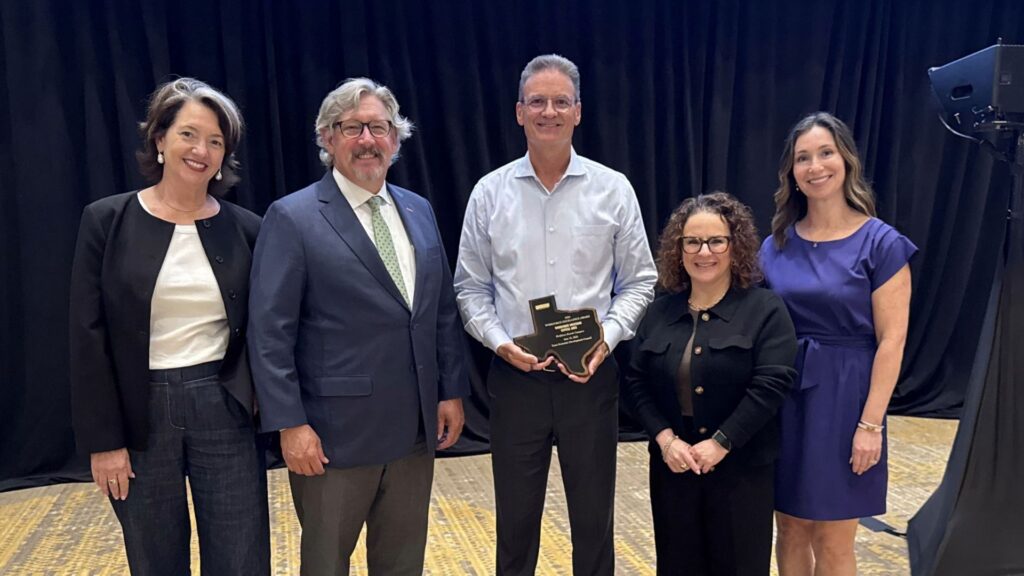
1. Austin Infrastructure Academy Earns Statewide Economic Development Recognition
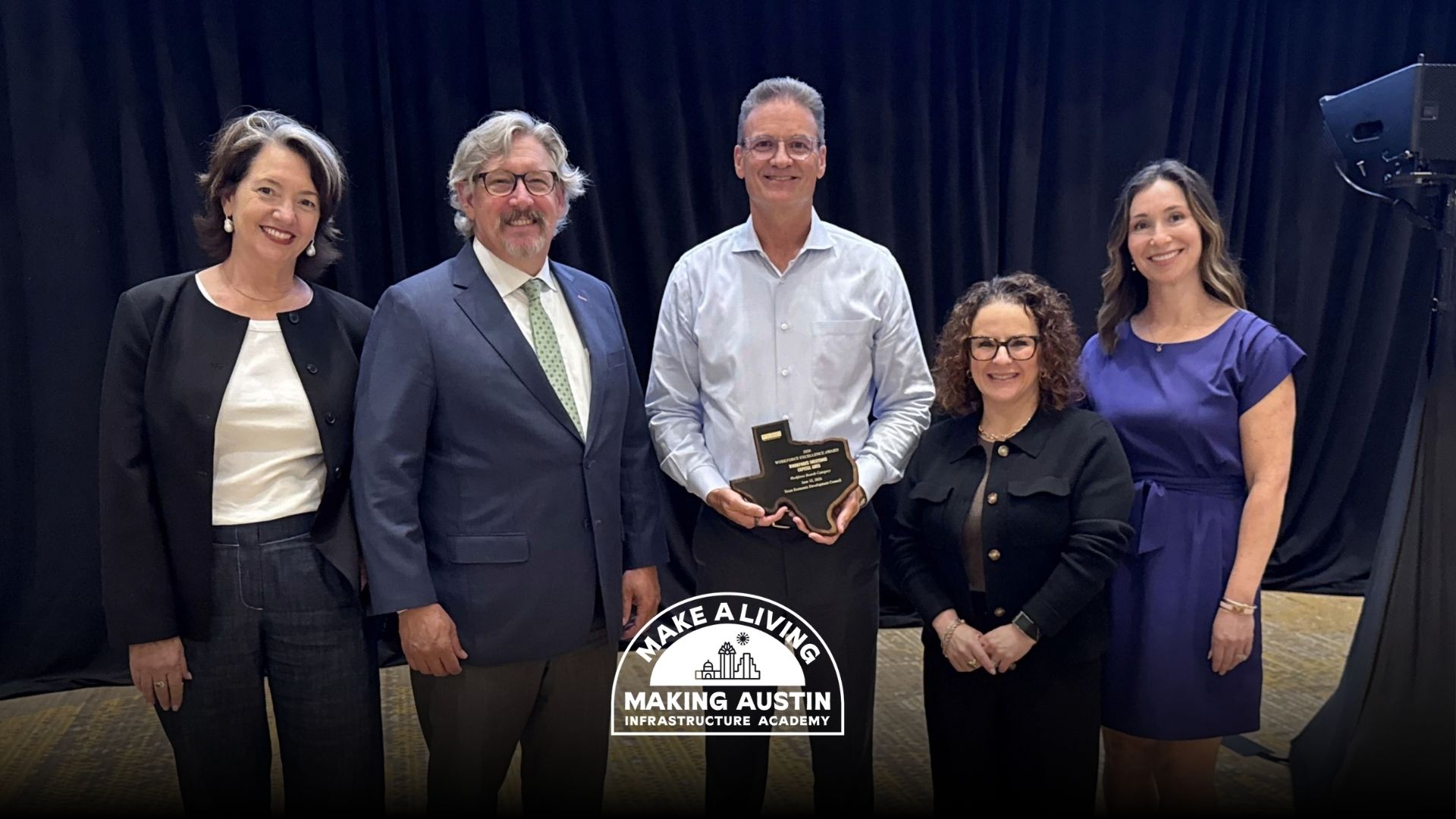
The Austin Infrastructure Academy has been named the recipient of the 2026 Workforce Excellence Award from the Texas Economic Development Council (TEDC). Since 2001, the award has recognized Texas communities that have implemented exceptional workforce initiatives, evaluating recipients on innovation, transferability, community commitment and leverage, measurable objectives, and secondary benefits.
The recognition reflects the Academy’s success as a regional partnership that strengthens both the workforce and the economy by preparing local residents for careers supporting Central Texas’ historic infrastructure investments.
2. Connecting Talent to Opportunity
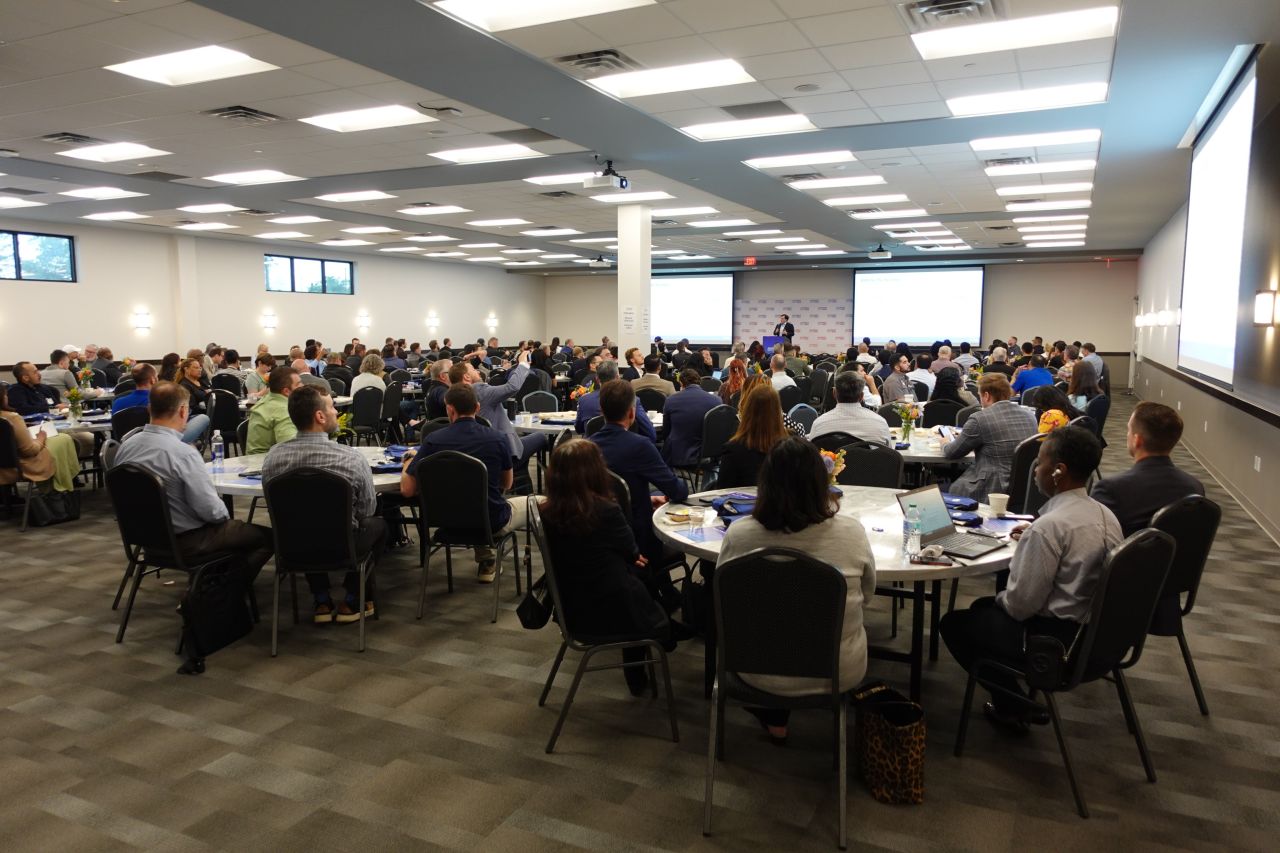
May 2026 Austin Infrastructure Academy Career Expo Outcomes
- 204 job seekers attended
- 246 additional job seekers registered w/ interest
- 24 employers
- 8 training providers
Partner With the Austin Infrastructure Academy
- Meet Career-Ready Talent: Join us at the Austin Infrastructure Academy Expo on August 27.
- Share Workforce Needs: Help shape future training programs by sharing current and future hiring demand.
- Post Open Positions: Connect with local job seekers through WorkInTexas.com.
Stories of Progress
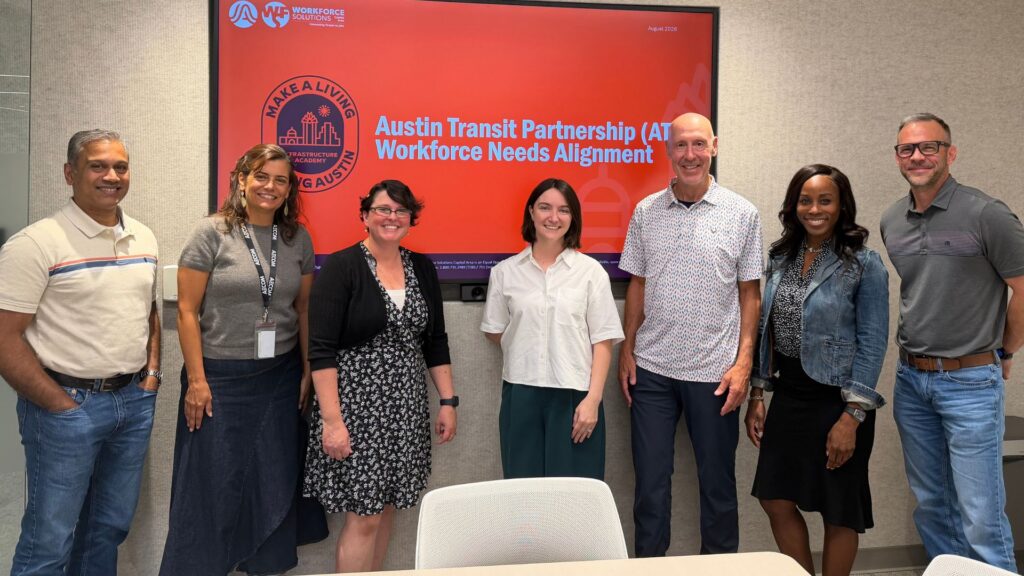
Austin Infrastructure Academy convening Austin Transit Partnership, Stacy Witbeck, AECOM, Kiewit, and Sundt to prep for building the local talent pipeline to support the Austin Light Rail project.
1. Aligning Workforce Needs with Capital Projects
The Austin Infrastructure Academy has launched workforce alignment meetings with major Capital Project partners, including Austin-Bergstrom International Airport, Austin Light Rail, the Austin Convention Center (and more to come!), to better understand future workforce demand and identify entry-level career opportunities connected to these investments.
These conversations help forecast hiring needs, align training and talent pipelines, and ensure capital investments create meaningful pathways into mobility and infrastructure careers for Austin residents.
Help us build your future workforce. Connect with our team to share your hiring forecasts so we can recruit, train, and prepare local talent before your projects begin.
2. Equipping K–12 Partners to Inspire Future Careers
Strong career pathways begin long before students enter the workforce. This quarter, the Austin Infrastructure Academy expanded its support for educators and community partners by launching the K-12 Partner Toolkit.
The toolkit provides teachers, CTE directors, counselors, and community partners with ready-to-use resources—including access to Hype Kits, classroom presentations, career events, employer engagement opportunities, and career exploration materials—to help students discover careers in transportation, construction, and other skilled trades.
By equipping partners with these tools, we’re expanding access to career awareness and strengthening the pipeline of future mobility and infrastructure talent.

Student using our VR headset and monitor. Snapshot of simulations aligned with in-demand Mobility & Infrastructure careers: Automotive Services Technician, Electrician, Carpenter, Construction Laborer, HVAC Technician, Plumber, Pipefitter, and Steamfitter, and more!
Looking Ahead
1. Preparing for the future Academy front door
Austin Community College & Workforce Solutions Capital Area Service Alignment
The Austin Infrastructure Academy is convening Austin Community College and Workforce Solutions Capital Area Career Services staff to align services and create a seamless experience for students and career seekers. Together, partners are mapping programs, support services, referral processes, and organizational strengths to design a coordinated “front door” that makes it easier for individuals to access career coaching, training, supportive services, and employment opportunities.
This foundational work will help ensure future Academy participants experience a streamlined pathway from career exploration to training and employment while maximizing the strengths of each partner organization.
2. Helping Employers Meet Austin’s Water Reuse Requirements
Austin’s 2024 onsite water reuse ordinance creates new operational requirements for large commercial and multifamily developments. To help employers prepare, Austin Water is leading the development of workforce training in partnership with Austin Community College, while the Austin Infrastructure Academy has provided framework to convene partners, impacted stakeholders, and employers to support implementation efforts.
Through this collaboration, employers can learn about the new requirements, available training opportunities, and potential funding resources to upskill existing workers, including facility managers, plumbers, and other building and water systems professionals. The initiative aims to help businesses successfully implement onsite water reuse systems while strengthening Austin’s water workforce. Training is anticipated to launch in fall 2026.