From major transportation projects to airport redevelopment and data center expansion, Central Texas is investing in the infrastructure needed to support a growing region. Meeting that demand will require a strong pipeline of skilled workers across construction, transportation, and the trades.
Key findings from the report include:
Major infrastructure projects across the region require an estimated 10,000 skilled workers annually
Current training capacity meets only about 60% of workforce demand
More than 13,600 job postings in mobility and infrastructure occupations were recorded in 2025, with over 2,300 employers competing for talent
Texas ranks second nationally for proposed data centers, with 24 active facilities and more planned
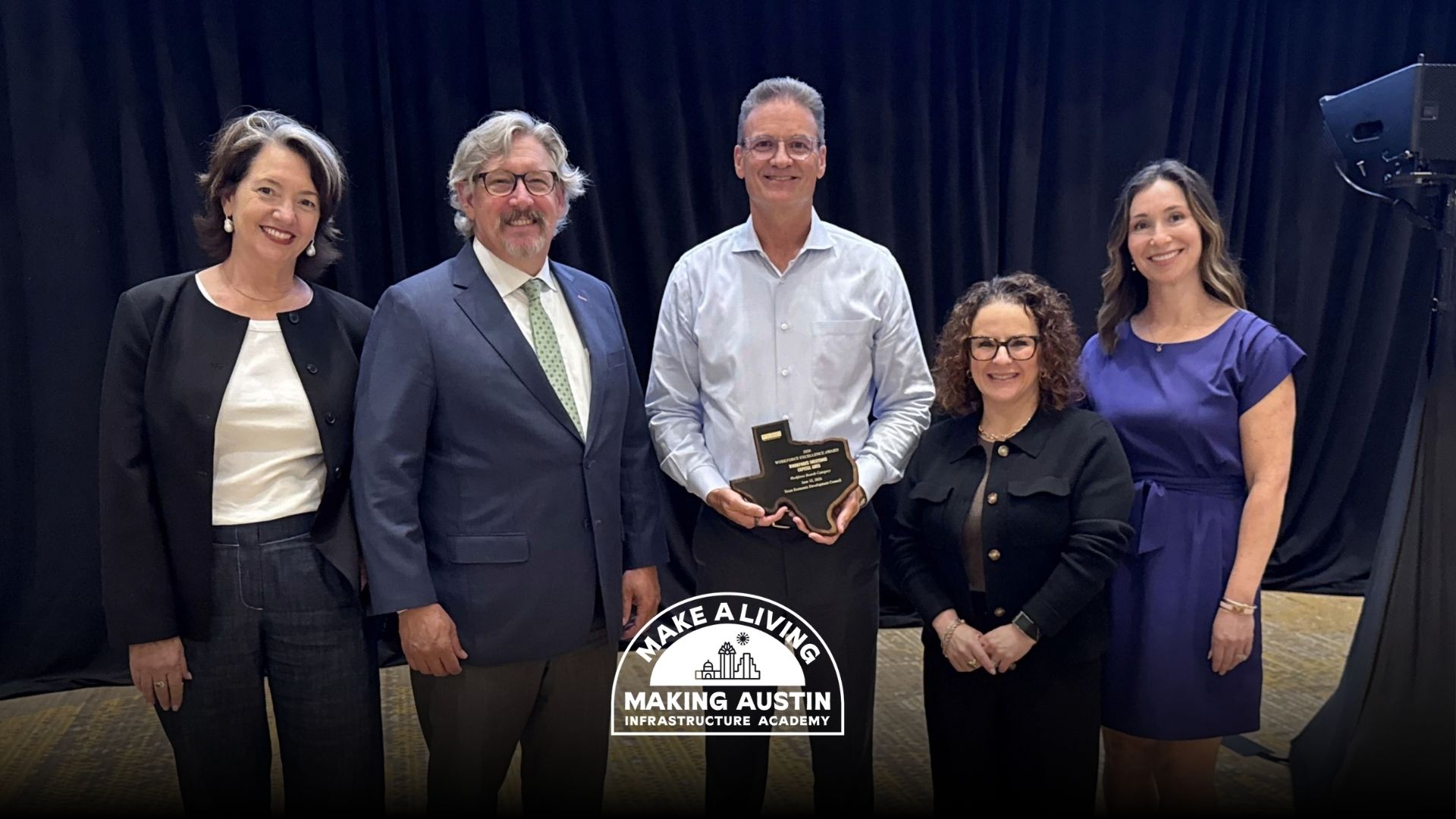
Southwest Airlines shares how Workforce Solutions Capital Area has become more than a hiring partner — but a continuous resource for recruiting, workforce events, and community connection.
In this employer testimonial, Southwest reflects on how the partnership has evolved over time through ongoing collaboration, candidate support, hiring events, and a deeper understanding of the company’s workforce needs.
From providing interview space near the airport to helping connect qualified candidates with career opportunities, Workforce Solutions continues to support employers through relationship-driven workforce solutions.
“It’s not just a one and done.”
In this story:
Employer hiring support
Workforce partnerships
Candidate recruitment
Community hiring events
Aviation and airport careers
Long-term workforce collaboration
Thank you to Southwest Airlines for sharing their partnership story.
Last month, ACC purchased a 560,000-square-foot facility for its new Southeast Austin campus, making additional space for its workforce training programs and the university’s Infrastructure Academy. The academy launched in 2025 in collaboration with the city, ACC, and Workforce Solutions Capital Area, a nonprofit supporting individuals in their search for local jobs. The academy is intended to help properly prepare students to meet the growing demand for workers for large-scale construction efforts like the I-35 and light rail expansions and the convention center redevelopment. The rapid, controversial emergence of data centers in Texas is also driving demand for skilled labor.
Since launching in March 2025, the Austin Infrastructure Academy has brought together employers, educators, community organizations, and workforce partners to strengthen Austin’s skilled trades talent pipeline.
Together, we’re helping local job seekers access training and career opportunities while supporting the workforce needs of Austin’s growing infrastructure and mobility industries.
We are committed to mindful growth, continuously aligning with employer partner needs to ensure that training leads directly to meaningful jobs. Strong employer partnerships are critical to this work—grounded in shared workforce forecasts, training informed by employer needs, clear entry-level career pathways, and a commitment to hire locally.
What is the Austin Infrastructure Academy?
The Austin Infrastructure Academy is a local coalition of partners in government, education, business, and the community working together to grow Austin’s workforce in transportation, construction, and other skilled trades.
We connect local people to training and careers that power Austin’s growth—removing barriers so they can make a living, making Austin.
What we do:
Help employers find the workers they need
Support people in building long-term careers
Remove barriers including training costs, childcare, transportation, and gear
Year One by the Numbers
March 2025 – March 2026; Workforce Solutions Capital Area outcomes only
1,561
Residents Connected to Career Opportunities
1,078
Participants Enrolled in the Austin Infrastructure Academy1
162
Training Scholarships Awarded
99+
Residents Employed or Advancing Their Careers2
$18,480
Average Increase in Annual Earnings3
1 Enrolled participants have been accepted into the Austin Infrastructure Academy and receive individualized career navigation, with access to training, supportive services, and job placement assistance based on their needs. 2 Unemployment Insurance (UI) data typically reflects a two-quarter reporting delay 3Median Current Salary: $41,600

Year One Highlights
1. Preparing Talent for High-Demand Careers
Training programs supported through the Austin Infrastructure Academy are aligned with current employer demand across Austin’s mobility and infrastructure industries. Below is a snapshot of the entry-level training pipeline developed to meet those needs.
March 2025 – March 2026; Workforce Solutions Capital Area outcomes only
Target Occupation
Graduates Trained
Heavy and Tractor-Trailer Truck Drivers
41
Electricians
40
Heating, Air Conditioning, and Refrigeration Mechanics and Installers
21
Carpenters / General Construction
6
Plumbers, Pipefitters, and Steamfitters
2
2. Strengthening Communication on the Job Site
Through a partnership with Texas Mutual, Freestyle Languages, Austin Safety Council, and Austin Chapter of the Associated General Contractors, we launched a grant-funded Spanish and English language course designed to improve communication across job sites.
A total of 61 participants took part in the program, helping strengthen workplace safety, teamwork, and career growth opportunities.
Why this matters:
Safety‑critical work depends on clear, trusted communication across crews
Language gaps surface as job site risk, not just training gaps
Workforce readiness includes the ability to raise concerns before incidents occur
Results include:
Spanish-language learners achieved a 74% attendance rate, up from 40% in a previous session.
80% of Spanish-language participants advanced in the program
English-language learners reported improved confidence communicating on job sites
3. Employers Supporting the Local Talent Pipeline
The following employers represent a snapshot of the 140+ partners collaborating with the Austin Infrastructure Academy to strengthen the local talent pipeline across construction, mobility, utilities, transportation, and skilled trades.
City of Austin (Austin Water, Austin Energy, Austin-Bergstrom International Airport, etc.)
Travis County (Facilities and Natural Resources and Transportation)
AECOM
Airco Mechanical
All Ways Restoration
Austin ISD
Austin Transit Partnership
Balfour Beatty
CAM Industrial Solutions
CapMetro
Cat5 Construction Services
Centex Materials
Civil & Environmental Consultants
Facility Solutions Group
First Class Transportation
Greystar
Halff
HDR Engineering
JE Dunn Construction
Kiewit
Lower Colorado River Authority (LCRA)
LiUNA (Southwest Laborers District Council)
Lyft
Marek Bros
Republic Services
Rosendin Electric
RPM Living
Southwest Airlines
Stacy Witbeck
Sundt Construction
Texas Materials
Turner Construction
TxDOT
University of Texas at Austin
and more!
4. Staying Connected to Industry Needs
The Austin Infrastructure Academy directly engages with subcontractors, general contractors, and project sponsors to stay connected to workforce needs across the region.
By participating in industry events and conversations, we’re able to better understand hiring trends, strengthen partnerships, and connect local residents to career opportunities.
Recent partner engagements include:
AISD Economic Opportunity Office
Runway to Opportunities: Journey With AUS Subcontractor Forum
More than 30 training provider representatives and frontline career staff came together for a collaborative learning exchange focused on infrastructure and skilled trades career pathways.
Participants shared referral strategies, training opportunities, and insights into employer needs — helping improve how job seekers are connected to careers and support services.
2. Building the Future Workforce
Building a strong workforce starts early by helping students explore real-world career opportunities through hands-on learning and industry exposure.
Through intentional partnerships with schools, educators, and industry leaders, we’re helping students better understand careers in transportation, construction, and other skilled trades while connecting classrooms to future opportunities..
Recent K–12 engagement efforts included:
Metroplex Career Rally: 98 students from Austin ISD, Del Valle ISD, Pflugerville ISD, and American Youthworks visited Plumbers & Pipefitters Local 286’s union hall on March 12 to explore skilled trades careers firsthand.
Austin Contractors & Engineers Association Construction Expo: 151 students participated in hands-on activities and explored career opportunities in the construction industry on March 27.
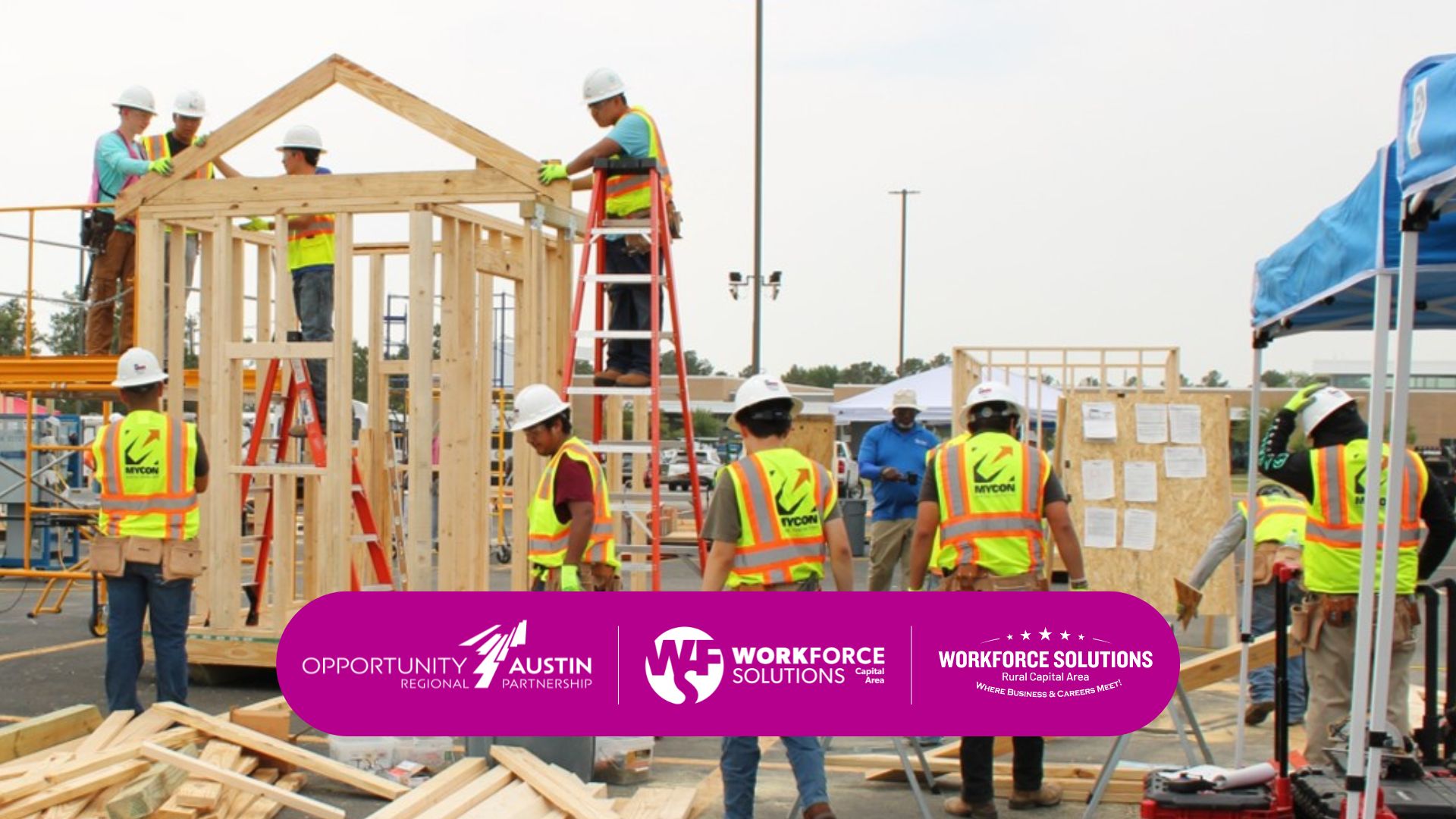
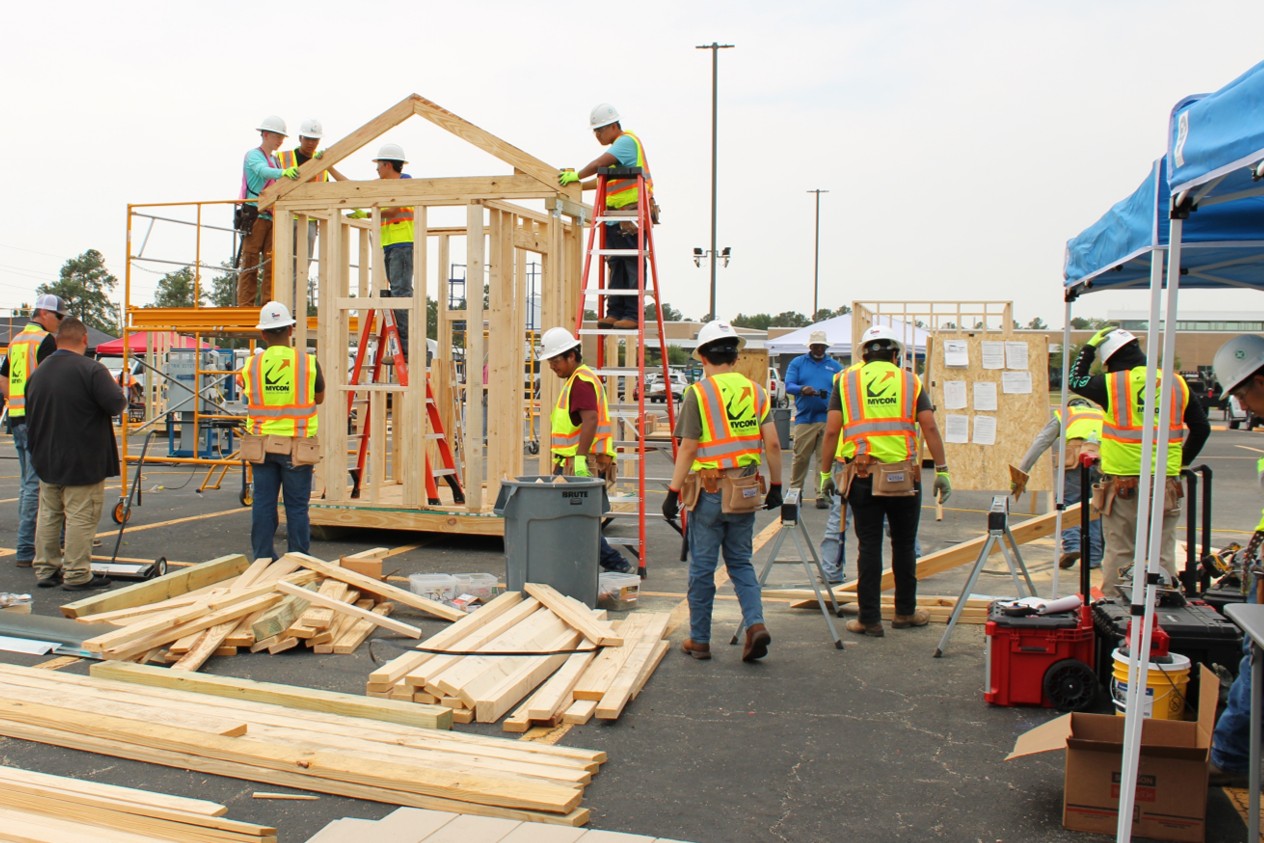
Construction Industry Education Foundation (CIEF) Design Build Competition: 100 high school students across seven teams designed and built structures under the guidance of industry professionals during the April 8–9 competition.
Photo: CIEF Design Build Competition at ACC Riverside
3. Expanding Opportunities for Women in Skilled Trades
Women remain underrepresented in infrastructure and skilled trades careers. To better understand barriers, motivations, and opportunities for growth, the Austin Infrastructure Academy gathered insights from more than 400 women across Central Texas.
What we heard:
Women are drawn to work with visible community impact and strong safety culture
Clear information about career pathways and entry points matter.
Childcare and schedule predictability remain major barriers.
Workplace culture, belonging, and representation influence interest and retention.
Austin Community College’s planned expansion in Southeast Travis County represents a major investment in the future of skilled trades education and workforce development. The facility will be the front door for the Infrastructure Academy in partnership with the City of Austin, Workforce Solutions Capital Area, and many other community partners, serving as a hub for hands-on training in construction, manufacturing, automotive technology, HVAC, welding, and related careers.
It’s been projected that Austin has needed to add tens of thousands infrastructure and mobility jobs to meet workforce demands. But in 2026, workforce development leaders say the demand for these jobs hasn’t been as strong as expected.
The Austin Infrastructure Academy officially has a permanent home after the Austin Community College District (ACC) purchased a facility that is expected to become the College’s second-largest campus.
According to a Thursday morning announcement from ACC, the 560,000-square-foot facility will also be a hub for workforce training in advanced manufacturing, building construction technology, automotive technology and collision repair, welding technology, and heating, air & refrigeration technology (HART).
It was acquired on Wednesday for $130,500,000, funded through the College’s 2022 General Obligation Bond, per the ACC announcement.
Area residents seeking careers in the infrastructure and mobility sector can attend an Austin Infrastructure Academy career expo Feb. 4 at Austin Community College’s Highland Campus.
The academy’s next infrastructure career fair will allow job-seekers to meet with area employers and explore career opportunities in fields like transportation, construction and other skilled trades. Workforce resources, and in-person interviews for open positions, will be offered.
As you sit in traffic or drive through a construction zone, perhaps your next career move could bring you behind the scenes of the Austin transportation world.
Movability, CapMetro and Workforce Solutions are hosting a networking event on Thursday on National Transit Career Day.
The Austin Infrastructure Academy is seeing early returns on its efforts to bolster Austin’s construction and mobility workforce, and talent should start to exit the new pipeline soon.
The academy, which launched in March, has seen notable interest from the private sector and job seekers over its efforts to connect locals to training opportunities in the construction industry. It was spawned by projections that Austin won’t have enough workers as it embarks on at least $25 billion in projects, including light rail expansions, I-35 upgrades, a new convention center and a larger airport — not to mention the usual private sector construction.
“We’ve seen slow momentum, but I think it’s going to increase over the next couple of months,” said Yael Lawson, the chief operations officer for Workforce Solutions Capital Area, which oversees the academy. “We’re training people now, so we’re going to start to see them graduating and hired.”
Workforce Solutions Capital Area has picked a leader to oversee a major push to bolster the region’s workforce.
Megan Fortson, who is now senior director of the Austin Infrastructure Academy, will help build out the infrastructure and construction workforce needed in the region to complete $25 billion in projects.
The Austin Infrastructure Academy — a collaboration between Workforce Solutions Capital Area, the city of Austin, Austin Community College and other local governments — officially launched in March. It’s tasked with helping fill the need for 10,000 new jobs annually in the infrastructure field that are being created through major projects like the expansion of Austin-Bergstrom International Airport, the expansion of I-35, the redevelopment of the Austin Convention Center and the buildout of the Austin Transit Partnership’s light rail project.