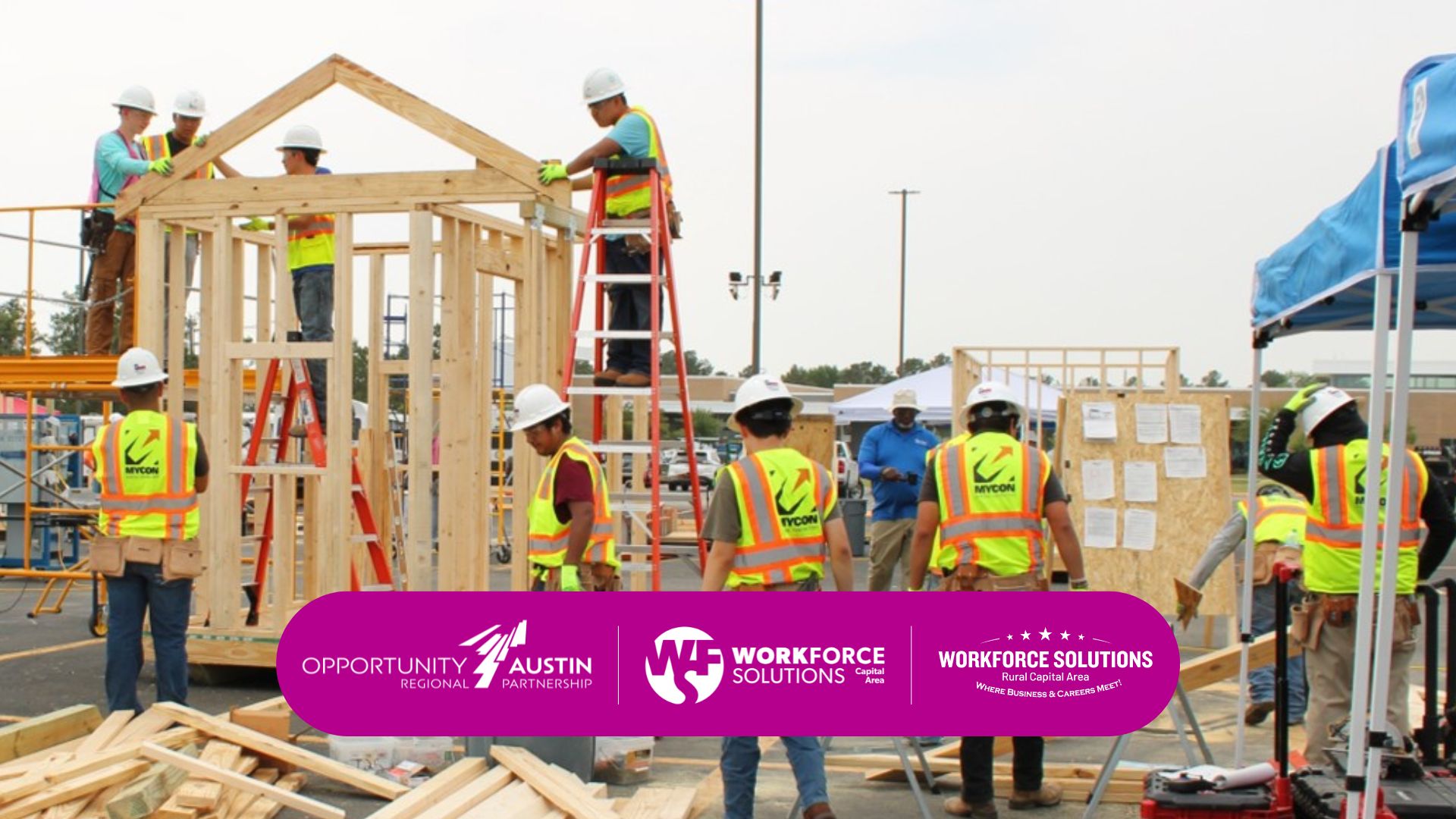
Building the region’s future starts with creating pathways for local people to be part of it.
Natalie Obregon, Workforce Development Director at Texas Construction Career Pathways, shares how partnering with Workforce Solutions Capital Area helps bring free construction training directly into Travis County communities, connect participants with stipends and wraparound supports, and create pathways into registered apprenticeships.
With a skilled labor gap and major infrastructure projects ahead, Natalie says one word captures what this work is ultimately about: future.
For David Peña, the path from high school to a career started before graduation.
While David was a student at Phoenix High School in Elgin ISD, Workforce Solutions Capital Area staff helped him explore career opportunities and connected him with a skilled trades apprenticeship at the Lower Colorado River Authority (LCRA). Through that opportunity, David was able to gain hands-on experience while still in high school and begin building a pathway into the workforce.
Today, David is a Phoenix High School graduate and a full-time LCRA employee.
His journey is an example of what can happen when students have access to career guidance, industry connections and opportunities to experience a career firsthand. David encourages other students to use the resources available to them, ask for help and remain open to opportunities—even if they don’t have their entire future figured out yet.
Keep reading to hear from David about his transition from high school to the workforce and the advice he has for students preparing for what comes next.
What has your journey been like transitioning from high school to employment?
“My transition from high school to employment has been a great learning experience. After graduating, I knew I wanted to find a career where I could continue growing, develop real-world skills, and build a strong future for myself. Finding an opportunity with LCRA has given me the chance to do exactly that. It has been exciting going from being a student to working in a professional environment and taking on more responsibility.”
What do you currently do?
“I currently work for LCRA. My job has given me the opportunity to learn more about the industry, gain hands-on experience, and work alongside people with a lot of knowledge and experience. I’m continuing to learn every day and figure out where I want to take my career in the future.”
While in high school, what would you say was the biggest help in being successful post high school?
“I would say the biggest help was having people around me who encouraged me to think about my future and take advantage of opportunities. The guidance and support I received from my teachers and staff helped me understand that there are many different paths to a successful career after high school. Learning how to communicate, be responsible, show up consistently, and take opportunities seriously has helped me a lot since graduating.”
Anything you want to add or comment on?
“I would encourage current high school students to take advantage of the resources and opportunities available to them while they are still in school. You don’t necessarily have to have your entire future figured out when you graduate. What matters is being willing to learn, work hard, and take opportunities when they come. There are many paths to building a successful career, and sometimes the opportunity you need is closer than you think.”
As another fiscal year comes to a close, we’re looking back at 10 moments that helped shape workforce development across Austin and Travis County.
FY26 was a year of connecting more local people to opportunity and working with employers, educators and community partners to strengthen the talent pipelines our region depends on.
From personalized support for job seekers and families to new pathways into in-demand occupations, these moments show what workforce development looks like when people have someone in their corner, a path forward and the support to take their next step.
Here are 10 moments that stood out.
10. We invested in the manufacturing leaders of tomorrow
Workforce Solutions Capital Area invested in the skills of Central Texas’ existing manufacturing workforce through incumbent worker training.
In partnership with the Austin Regional Manufacturers Association, we invested $18,000 to help 12 employees from four local manufacturers (Athena Manufacturing, Acutronic, Cypress Technologies and White Rock Manufacturing) strengthen their supervisory skills through training delivered by the Texas Manufacturing Assistance Center.
Why it matters: Helping employers develop talent from within creates opportunities for workers to advance while strengthening the leadership pipeline local manufacturers need to grow.
9. We put the people behind our workforce system at the center of the story
This year, we began sharing firsthand stories from the people who experience our workforce system every day.
Job seekers, employers, child care providers and parents shared how career guidance, training, child care and other workforce services helped them take their next step.
Why it matters: The numbers tell part of our story. Hearing directly from the people behind them shows what workforce development can mean for a career, a family or a business.
8. More than 850 early childhood professionals came together at SHINE
At the SHINE Symposium, held in partnership with Workforce Solutions Rural Capital Area, more than 850 early childhood professionals came together for professional development, resources and opportunities to connect with others across the child care community.
Why it matters: Supporting early childhood professionals strengthens the child care system that local families and our broader workforce depend on.
7. We launched Workforce Industry Insights to spotlight Central Texas’ growing industries
In partnership with Opportunity Austin and Workforce Solutions Rural Capital Area, we launched Workforce Industry Insights, bringing workforce data and regional expertise together to examine the talent needs shaping some of Central Texas’ fastest-growing industries.
Through white papers, case studies and data reports, the partnership provides employers with insights into hiring trends, workforce needs and the regional strategies helping build talent pipelines across Central Texas.
Why it matters: Giving employers a clearer picture of our region’s workforce helps local businesses plan for their talent needs while showcasing Central Texas’ ability to support industries looking to grow here.
6. Yael Lawson was named CEO of Workforce Solutions Capital Area
Her appointment marked a new chapter for Workforce Solutions Capital Area as we continue bringing employers, educators, community organizations and public partners together around our region’s workforce needs.
5. More than 100 high school seniors got Next Level Ready
More than 100 high school seniors from Austin ISD, Elgin ISD, Manor ISD and Pflugerville ISD participated in Next Level Ready, connecting students preparing for life after high school with local employers, educators and workforce organizations.
Students came prepared with resumes, professional attire and elevator pitches before meeting directly with participating organizations. They also heard presentations from Amplify Credit Union and Austin SHRM and had an opportunity to receive a professional headshot.
Why it matters: Connecting students directly with employers and helping them practice the skills they’ll need gives young people a clearer next step as they move from high school into work or continued education.
4. Regional partners launched the Central Texas Healthcare Academy
This year, regional partners launched the Central Texas Healthcare Academy, creating new opportunities for high school students to begin preparing for healthcare careers before graduation.
Developed by the Central Texas Healthcare Partnership, the Academy allows students to begin healthcare training while still in high school, completing prerequisites and co-requisites for pathways including nursing, Surgical Tech, Radiology Tech and Health Information Technology.
Why it matters: Central Texas employers need more healthcare professionals, while students need clearer pathways into those careers. Starting healthcare training earlier can help students build a path toward in-demand careers while strengthening the region’s future healthcare workforce.
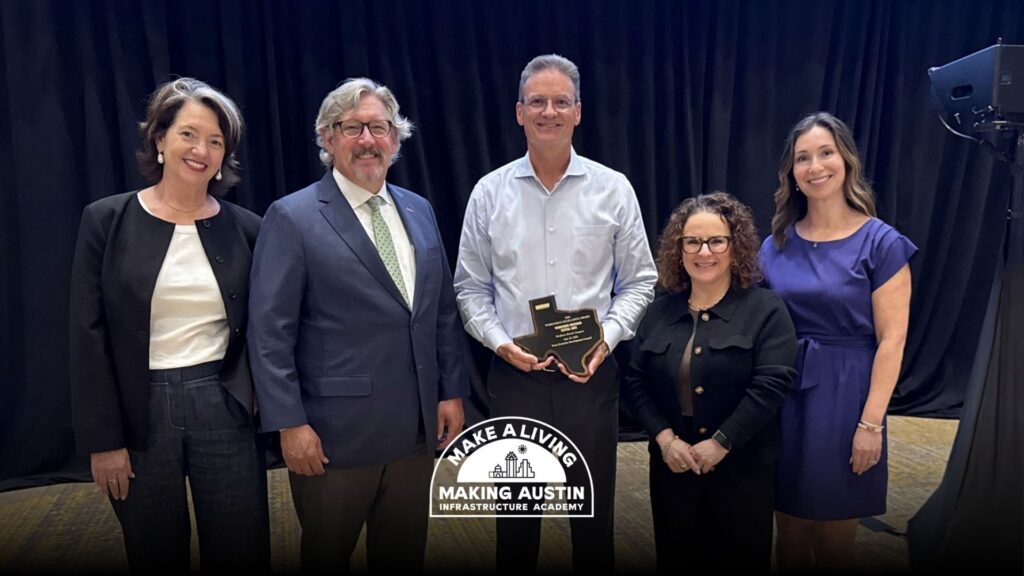
3. The Austin Infrastructure Academy earned statewide recognition
The Austin Infrastructure Academy earned statewide recognition for its collaborative approach to preparing local residents for careers connected to the region’s major infrastructure investments.
The Austin Infrastructure Academy is a local coalition of partners in government, education, business, and the community working together to grow Austin’s workforce in transportation, construction, and other skilled trades. The Academy connects local people to training and careers that power Austin’s growth—removing barriers so they can make a living, making Austin.
Why it matters: The Academy connects local people to careers created by our region’s infrastructure investments while helping employers build the skilled workforce needed to deliver those projects.
2. Travis County launched a $21 million investment to expand child care access
Through Raising Travis County, Travis County launched a $21 million investment to expand access to affordable child care and strengthen the providers families depend on. Through the initiative, Workforce Solutions Capital Area is expanding child care scholarships for local families while delivering gap funding to providers, helping make care more affordable for families and more sustainable for the programs that serve them.
As of August 5:
577 children were enrolled in Raising Travis County scholarships
132 child care providers were receiving gap payments
$4.2 million in gap payments had been distributed to providers
Why it matters: Child care can be one of the biggest barriers between a parent and their next opportunity. Expanding access helps parents work, train and advance while supporting the providers who make that possible.
1. We marked one year of impact through the Austin Infrastructure Academy
One year after its launch, the Austin Infrastructure Academy is showing how career navigation, training and support can connect local residents with the workforce opportunities created by our region’s infrastructure investments.
Enrolled 1,654participants into the Austin Infrastructure Academy
Awarded 210 training scholarships
Helped 142 residents become employed or advance their careers
Behind those numbers are local residents receiving career coaching, training and other support designed around real workforce demand.
Why it matters: The Austin Infrastructure Academy aligns career navigation, training and support with employer demand, helping local residents build a path toward the jobs being created by our region’s infrastructure investments.
See more of our impact
These 10 moments capture only part of what local job seekers, employers, families, students and partners accomplished together this year.
For a deeper look at the results behind our workforce system, explore our recently released FY25 Impact Report, highlighting outcomes across job seeker services, employer engagement, child care and our future workforce.
As we begin FY27, we’re carrying forward the partnerships, lessons and momentum of the past year as we continue our mission to support and connect local people to local jobs.
The Austin Infrastructure Academy will receive more than $2.5 million in city funds over the coming years to support the workforce training and jobs program as several major public projects continue their development.
“Part of our goal was to evolve the economic development paradigm where it’s not just about, at the end of every year, counting the number of new jobs created, but counting the number of people we’re actually getting into jobs that are Austinites,” Mayor Kirk Watson said.
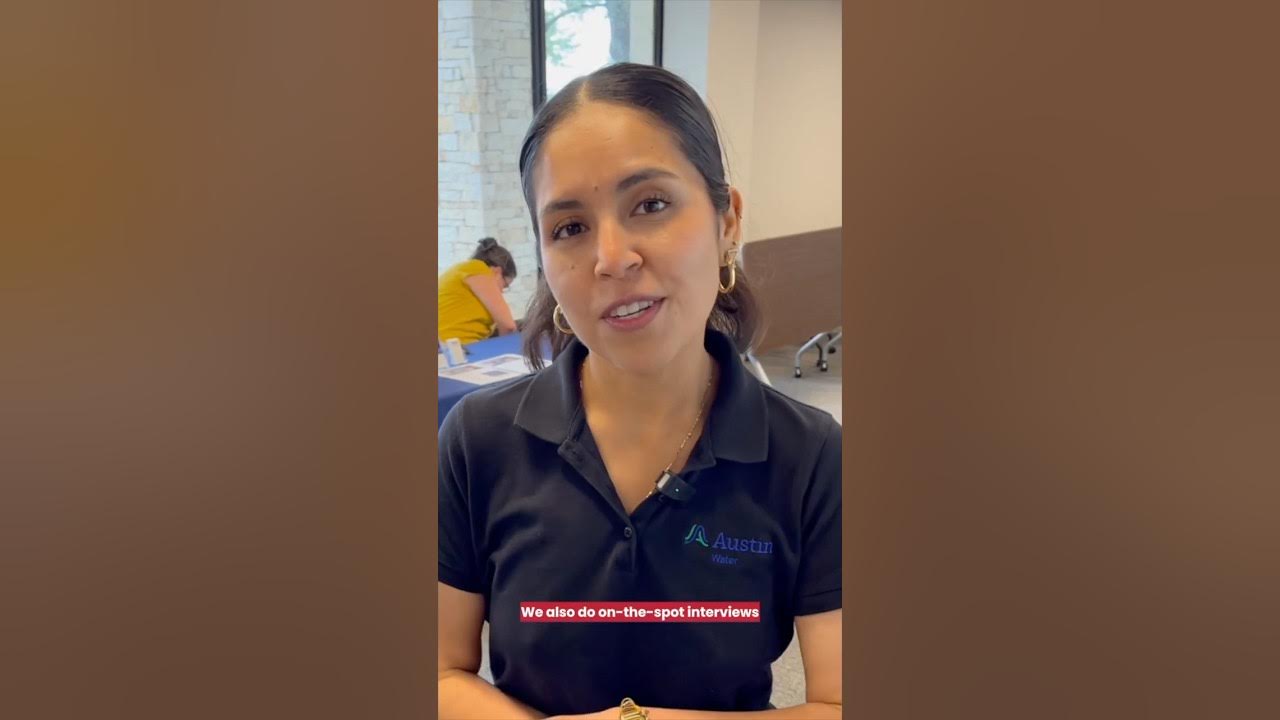
From connecting with qualified candidates to staying engaged with industry partners, Austin Water has found value in its partnership with Workforce Solutions Capital Area.
Human Resources Specialist Lesli Martinez shares how hiring events, on-the-spot interviews and Mobility & Infrastructure sector workgroups help Austin Water recruit for critical positions, connect with experienced talent and stay informed about workforce programs and opportunities.
See the Austin Infrastructure Academy’s latest impact reports.
Aligning capital project workforce needs with Austin’s talent pipeline
This quarter, the Austin Infrastructure Academy continued its focus on building sustainable, demand-aligned career pathways that connect Austinites to opportunities created through major capital projects across Austin. By convening employers, education partners, workforce organizations, and community partners, the Academy is helping align future workforce needs with the training, outreach, and support systems needed to prepare local talent for careers in transportation, construction, and other skilled trades.
Through intentional collaboration across the workforce ecosystem, the Academy is working to ensure Austin residents—including high school graduates, career changers, and other local job seekers—have access to clear pathways, the right resources, and the skills needed to launch successful careers, while employers have a stronger pipeline of prepared talent to support future projects.
What is the Austin Infrastructure Academy?
The Austin Infrastructure Academy is a local coalition of partners in government, education, business, and the community working together to grow Austin’s workforce in transportation, construction, and other skilled trades.
We connect local people to training and careers that power Austin’s growth—removing barriers so they can make a living, making Austin.
What we do:
Help employers find the workers they need
Support people in building long-term careers
Remove barriers including training costs, childcare, transportation, and gear
Participants Enrolled in the Austin Infrastructure Academy1
572
1,654
Training Scholarships Awarded
43
210
Residents Employed or Advancing Their Careers2
36
142
1 Enrolled participants have been accepted into the Austin Infrastructure Academy and receive individualized career navigation, with access to training, supportive services, and job placement assistance based on their needs. 2 Unemployment Insurance (UI) data typically reflects a two-quarter reporting delay
Quarterly Highlights
1. Austin Infrastructure Academy Earns Statewide Economic Development Recognition
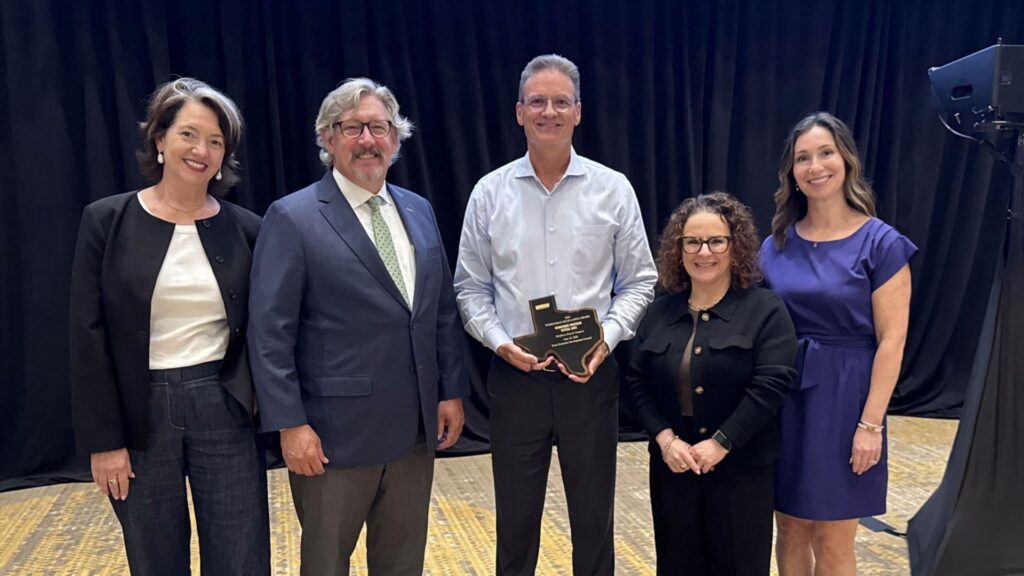
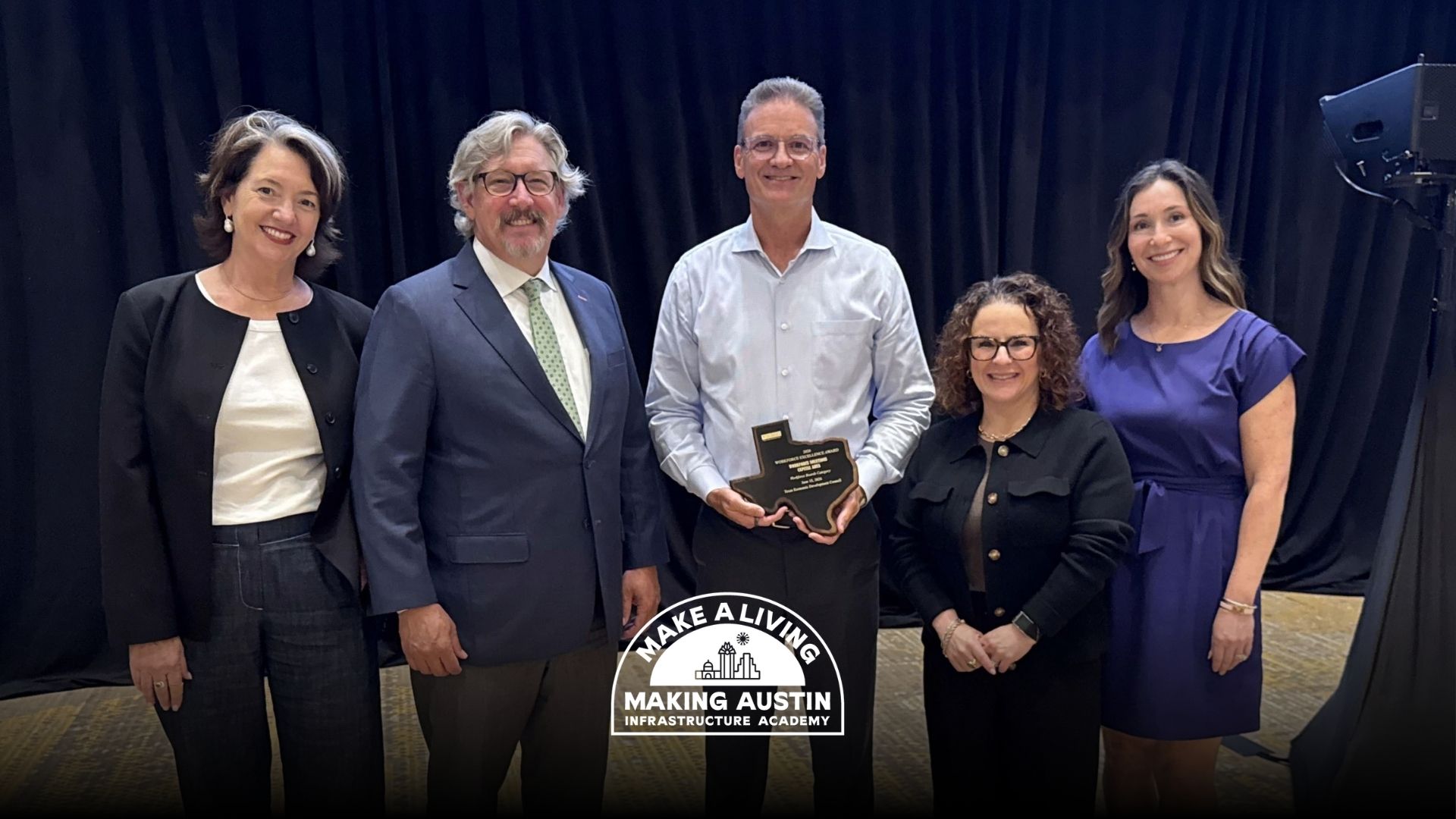
The Austin Infrastructure Academy has been named the recipient of the 2026 Workforce Excellence Award from the Texas Economic Development Council (TEDC). Since 2001, the award has recognized Texas communities that have implemented exceptional workforce initiatives, evaluating recipients on innovation, transferability, community commitment and leverage, measurable objectives, and secondary benefits.
The recognition reflects the Academy’s success as a regional partnership that strengthens both the workforce and the economy by preparing local residents for careers supporting Central Texas’ historic infrastructure investments.
2. Connecting Talent to Opportunity
May 2026 Austin Infrastructure Academy Career Expo Outcomes
Job seekers attended
204
Additional job seekers registered with interest
246
Employers
24
Training providers
8
At the May Expo, Tirone shared his experience returning to the workforce after being laid off from a manufacturing technician position. He credited Workforce Solutions staff with helping him navigate technology barriers and his job search.
Since filming the story, Tirone has found new employment.
Partner With the Austin Infrastructure Academy
Meet Career-Ready Talent: Join us at our next career expo.
Share Workforce Needs: Help shape future training programs by sharing current and future hiring demand.
Post Open Positions: Connect with local job seekers through WorkInTexas.com.
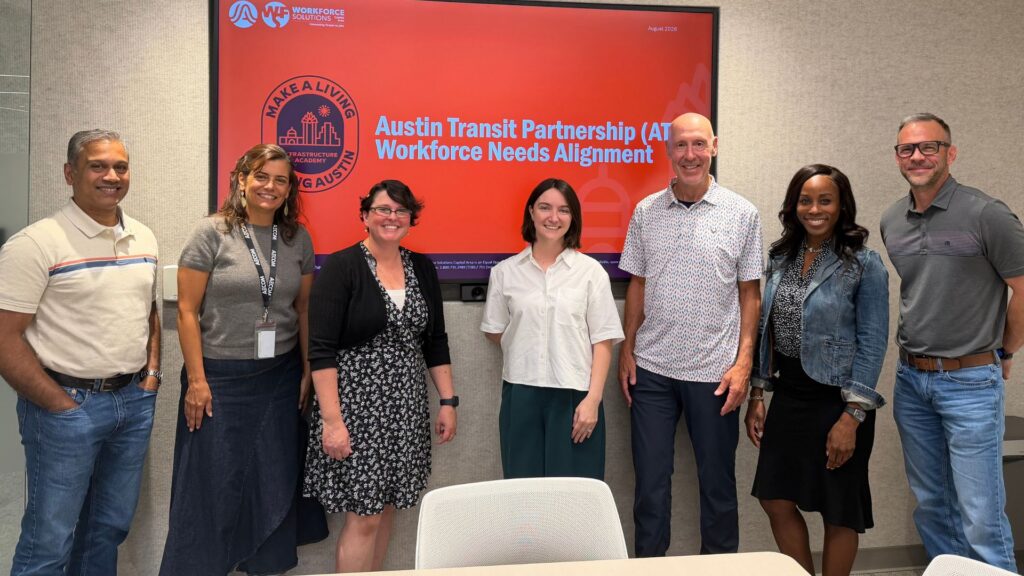
Austin Infrastructure Academy convening Austin Transit Partnership, Stacy Witbeck, AECOM, Kiewit, and Sundt to prep for building the local talent pipeline to support the Austin Light Rail project.
1. Aligning Workforce Needs with Capital Projects
The Austin Infrastructure Academy has launched workforce alignment meetings with major Capital Project partners, including Austin-Bergstrom International Airport, Austin Light Rail, the Austin Convention Center (and more to come!), to better understand future workforce demand and identify entry-level career opportunities connected to these investments.
These conversations help forecast hiring needs, align training and talent pipelines, and ensure capital investments create meaningful pathways into mobility and infrastructure careers for Austin residents.
2. Equipping K–12 Partners to Inspire Future Careers
Strong career pathways begin long before students enter the workforce. This quarter, the Austin Infrastructure Academy expanded its support for educators and community partners by launching the K-12 Partner Toolkit.
The toolkit provides teachers, CTE directors, counselors, and community partners with ready-to-use resources—including access to Hype Kits, classroom presentations, career events, employer engagement opportunities, and career exploration materials—to help students discover careers in transportation, construction, and other skilled trades.
By equipping partners with these tools, we’re expanding access to career awareness and strengthening the pipeline of future mobility and infrastructure talent.
Student using our VR headset and monitor. Snapshot of simulations aligned with in-demand Mobility & Infrastructure careers: Automotive Services Technician, Electrician, Carpenter, Construction Laborer, HVAC Technician, Plumber, Pipefitter, and Steamfitter, and more!
Looking Ahead
1. Preparing for the future Academy front door
Austin Community College & Workforce Solutions Capital Area Service Alignment
The Austin Infrastructure Academy is convening Austin Community College and Workforce Solutions Capital Area Career Services staff to align services and create a seamless experience for students and career seekers. Together, partners are mapping programs, support services, referral processes, and organizational strengths to design a coordinated “front door” that makes it easier for individuals to access career coaching, training, supportive services, and employment opportunities.
This foundational work will help ensure future Academy participants experience a streamlined pathway from career exploration to training and employment while maximizing the strengths of each partner organization.
2. Helping Employers Meet Austin’s Water Reuse Requirements
Austin’s 2024 onsite water reuse ordinance creates new operational requirements for large commercial and multifamily developments. To help employers prepare, Austin Water is leading the development of workforce training in partnership with Austin Community College, while the Austin Infrastructure Academy has provided framework to convene partners, impacted stakeholders, and employers to support implementation efforts.
Through this collaboration, employers can learn about the new requirements, available training opportunities, and potential funding resources to upskill existing workers, including facility managers, plumbers, and other building and water systems professionals. The initiative aims to help businesses successfully implement onsite water reuse systems while strengthening Austin’s water workforce. Training is anticipated to launch in fall 2026.
Update: Shortly after we filmed his story, Tirone connected with an employer at a Workforce Solutions job fair and found a new job.
Tirone knows how quickly life can change.
After being laid off from a manufacturing technician position, he suddenly found himself facing an unfamiliar job market. Like many experienced workers, he discovered that finding employment looked much different than it had years before.
“Being a little computer illiterate is a downfall… everything is computerized now,” he shared.
Unsure where to begin, Tirone turned to Workforce Solutions Capital Area.
From his very first visit to the East Career Center, he found more than job leads. He found people willing to answer questions, provide guidance, and help him navigate a process that initially felt overwhelming.
“When you’re laid off, it’s gut hitting,” Tirone said. “If you ain’t been down that road, it’s a rough road to go through.”
That support didn’t end after one visit.
As Tirone continued his job search, Workforce Solutions staff remained alongside him—connecting him with career guidance, hiring events, and additional resources as he worked toward his next opportunity. His journey reflects the coordinated support that helps many customers navigate periods of transition with confidence.
Today, he encourages others not to wait until they feel stuck.
“This is a great place for people who want a job. I think you should go to one of these [Workforce Solutions locations] and you can find something.”
For Tirone, Workforce Solutions became exactly that—a place to start again.
When asked to describe Workforce Solutions Capital Area in one word, his answer was simple:
The Austin Infrastructure Academy has earned the 2026 Workforce Excellence Award from the Texas Economic Development Council (TEDC). Since 2001, the award has recognized Texas communities that have implemented exceptional workforce initiatives, evaluating recipients on innovation, transferability, community commitment and leverage, measurable objectives, and secondary benefits.
The recognition reflects the Academy’s growing impact as a regional partnership that strengthens both the workforce and the economy by preparing local residents for careers supporting Central Texas’ historic infrastructure investments.
What is the Austin Infrastructure Academy?
The Austin Infrastructure Academy is a local coalition of partners in government, education, business, and the community working together to grow Austin’s workforce in transportation, construction, and other skilled trades.
We connect local people to training and careers that power Austin’s growth—removing barriers so they can make a living, making Austin.
What we do:
Help employers find the workers they need
Support people in building long-term careers
Remove barriers including training costs, childcare, transportation, and gear
Building the Workforce Behind Central Texas’ Growth
Central Texas is experiencing historic investment in transportation, housing, utilities, aviation, semiconductor manufacturing, and other critical infrastructure. Delivering these projects will require thousands of skilled workers over the coming decades.
Recognizing this need, Mayor Kirk Watson, Travis County Judge Andy Brown, Workforce Solutions Capital Area, Austin Community College, employers, labor organizations, and community partners came together to launch the Austin Infrastructure Academy—a first-of-its-kind regional partnership designed to prepare local residents for careers supporting these transformative projects.
Unlike traditional workforce programs that begin with existing training offerings, the Academy was designed around employer demand. By aligning public infrastructure investment with workforce development, education, and industry, the Academy creates pathways into family-supporting careers while helping employers meet critical workforce needs.
From the very beginning, the Austin Infrastructure Academy has been designed as a human-centered initiative. Workforce development is personal. People don’t just need information—they need guidance, encouragement and someone to help them navigate their next step.
A Model Recognized Beyond Austin
The Academy’s collaborative approach has earned recognition at both the national and state levels.
In 2024, the U.S. Conference of Mayorsadopted a resolution encouraging cities across the country to implement workforce development initiatives similar to the Austin Infrastructure Academy. The resolution recognized the Academy’s integrated approach to bringing together public project sponsors, employers, workforce providers, labor organizations, and supportive services to ensure local residents can benefit from major infrastructure investments.
Now, in 2026, the Texas Economic Development Council has recognized the Academy with its Workforce Excellence Award, highlighting the initiative as an example of how workforce development and economic development work hand in hand to strengthen regional competitiveness.
Year One Impact
The Academy’s first year demonstrated strong momentum in connecting residents to opportunity while supporting employers building Central Texas’ future workforce.
1,561 individuals connected to career opportunities
1,078 participants enrolled in the Austin Infrastructure Academy 1
162 training scholarships awarded
99+ residents secured employment or advanced their careers 2
$18,480 average increase in annual earnings for participants 3
Beyond these numbers, the Academy expanded apprenticeship pathways, strengthened employer partnerships, connected residents to high-demand careers, and increased access to supportive services that help participants complete training and enter the workforce.
Economic Development Through Workforce Development
By coordinating career navigation, training, employer engagement, and supportive services through a single regional partnership, the Academy helps residents access family-supporting careers while strengthening the workforce that underpins Central Texas’ continued growth.
The Academy demonstrates that workforce development is economic development. Through strategic collaboration among public agencies, education, employers, labor organizations, and community organizations, it is creating measurable benefits for workers, employers, and the regional economy.
Looking Ahead
As the Austin Infrastructure Academy enters its second year, a major milestone lies ahead. Austin Community College’s planned expansion in Southeast Travis County will serve as the future front door to the Austin Infrastructure Academy. Developed in partnership with the City of Austin, Workforce Solutions Capital Area, and many other community partners, the facility will become a regional hub for workforce development, providing hands-on training in construction, manufacturing, automotive technology, HVAC, welding, and other high-demand skilled trades.
Together, continued investment in the Academy and the development of this regional training hub will help ensure Central Texas has the workforce needed to deliver historic infrastructure projects while creating lasting economic opportunity for local residents.
Recognition from both the U.S. Conference of Mayors and the Texas Economic Development Council underscores the Academy’s growing impact as an innovative model for aligning workforce development with economic development. As Central Texas continues to grow, the Academy will help ensure local residents are prepared to build and benefit from that future.
1 Enrolled participants have been accepted into the Austin Infrastructure Academy and receive individualized career navigation, with access to training, supportive services, and job placement assistance based on their needs
2 Unemployment Insurance (UI) data typically reflects a two-quarter reporting delay
The Austin Infrastructure Academy was created due to an expectation the region would need to add tens of thousands of new jobs in the years ahead. After AIA’s first year, the massive demand for jobs has yet to arrive. But the academy still found some early success in connecting employers to workers. Included with this report is a list of the largest construction companies in the region.
From major transportation projects to airport redevelopment and data center expansion, Central Texas is investing in the infrastructure needed to support a growing region. Meeting that demand will require a strong pipeline of skilled workers across construction, transportation, and the trades.
Key findings from the report include:
Major infrastructure projects across the region require an estimated 10,000 skilled workers annually
Current training capacity meets only about 60% of workforce demand
More than 13,600 job postings in mobility and infrastructure occupations were recorded in 2025, with over 2,300 employers competing for talent
Texas ranks second nationally for proposed data centers, with 24 active facilities and more planned