
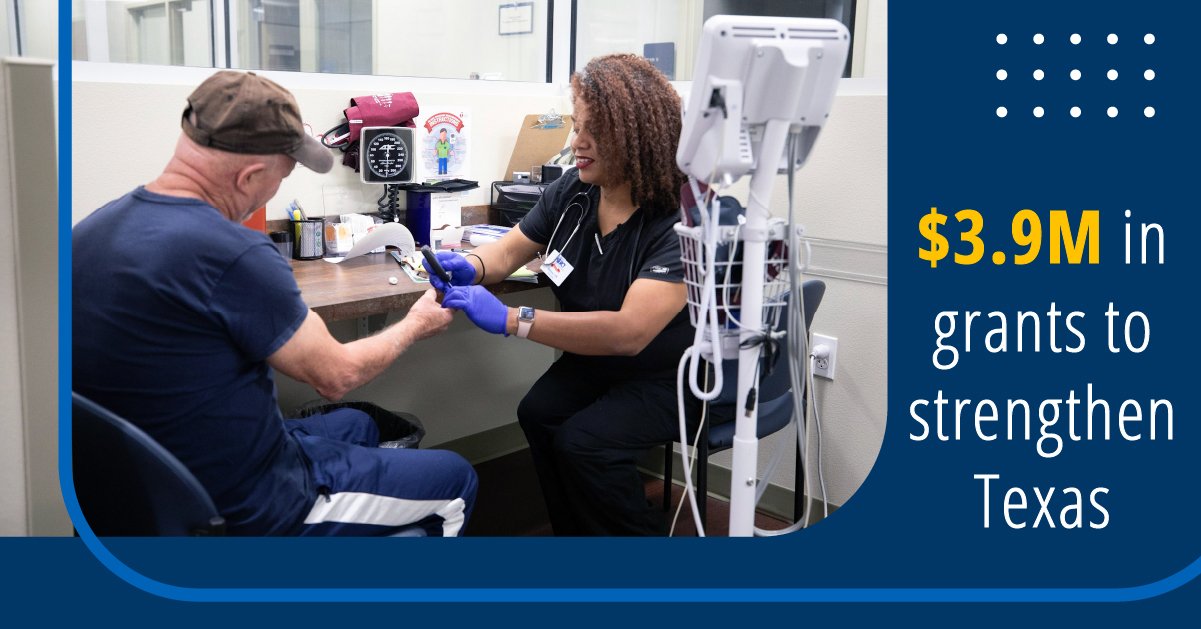
We’re honored to be one of 57 nonprofits chosen as grant partners through Texas Mutual Insurance Company’s workforce development and safety training grant cycle focused on fortifying businesses to strengthen the state’s economy!
Author: hahnwebdev
-

City of Austin to host Senior Job Fair Nov. 16
The City of Austin said Thursday it will host a Senior Job Fair on Nov. 16.
The free fair will be at the Texas Workforce Solutions Capital Area on 9001 N IH-35. It will start at 11 a.m. and end at 2 p.m.
The city said the fair will give people a chance to meet potential employers from the city as well as local businesses.
-
Building a Robust Labor Force to Deliver Generational Infrastructure
Considering the imminent arrival of several large-scale projects, Austin must prepare itself for the heightened demand for M+I workers. Building A Robust Labor Force to Deliver Generational Infrastructure is Central Texas’ first-ever labor and demand forecast for the mobility and infrastructure (M+I) sector, initiated to inform the region’s action plan for connecting local people to the thousands of jobs and careers created by the M+I industries.
Why it matters: With the investment in transformational regional infrastructure, we can address Austin’s affordability challenges by creating family-supporting jobs and sustainable career pathways, while improving regional mobility.
- Austin can cultivate a strong and skilled labor force capable of undertaking these large-scale mobility and infrastructure projects, thereby redefining economic development prospects to foster prosperity for all.
Big picture: Austin, now the ninth-largest city in the nation, has grown by 14% in the past five years, sparking increased demand for new housing, improved roads, and other infrastructure enhancements.
- This rapid expansion underscores the critical need for a robust M+I workforce, equipped to manage, supervise, and construct infrastructure projects.
- Currently, Austin’s M+I sector employs over 222,000 workers, positioning it as the region’s second-largest sector, surpassing both healthcare and advanced manufacturing.
Zoom out: The M+I industry has gained significant national attention, with the implementation of the Bipartisan Infrastructure Law, the Inflation Reduction Act, and the CHIPS and Science Act, resulting in a historic investment of $2.5T.
- A significant portion of this funding, approximately $500 billion, is allocated to infrastructure projects and is closely linked to workforce development.[1] Consequently, the M+I industry urgently requires a forward-looking workforce development system.
- Approximately 1.7M workers leave their positions annually, highlighting the substantial efforts needed to fill these vacancies. The recent federal legislation is anticipated to generate an additional 1.5M jobs annually.[2]
- Of note: The industry has been criticized for its lack of inclusivity towards younger workers, women, and people of color. Therefore, inclusive training programs targeting non-traditional populations and providing access to well-paying jobs are imperative to meet the escalating demand for projects.
Bottom line: Our research provides crucial insights into the M+I sector by examining the existing capacity of Austin’s M+I workforce, forecasting its growth trajectory until 2040, and presenting solutions that exist both nationally and within the region to fortify the workforce development ecosystem.
The 10 most relevant trends for defining the current gaps and future opportunities in the M+I sector are:
- 10,000 M+I jobs created annually through 2040.
- The region’s existing skill shortages could hamper project success.
- Even the deepest wells of talent will be spread thin.
- A 4,000 annual training gap could exacerbate skill shortages.
- 6 in 10 M+I workers earn a prevailing wage.
- Women account for only 14% of the M+I workforce.
- Automation is set to impact M+I jobs more significantly than most other sectors.
- Employers seem to be disconnected from the skilled trade talent pool within the region.
- There is no consistent standard training period for the region’s M+I training initiatives.
- Present-day recruiting methods in the M+I sector are limited.
GO DEEPER:
If you are a job creator who recruits for roles or coordinates contracts or training for jobs in the M+I landscape — everything from transit operators to mechanics and engineers — your voice is needed. Sign up to learn more about the industry sector partnership and to join us for future work sessions.
Workforce Solutions Capital Area is on point to gauge how our community meets the moment and fills the roles this burgeoning economic sector will require, alongside Austin Mayor Kirk Watson, Travis County Judge Andy Brown, and their appointed Mobility & Infrastructure Leadership Group. An action plan is in development by the Leadership Group to bring thousands more residents into M+I jobs in our region. One of the first action items from this partnership was to deliver this research study.
[1] Ross, Martha, Joseph Kane, Felix Laniyan, and Annelies Goger. “How State and Local Leaders Can Harness New Infrastructure Funding to Build a Stronger, More Inclusive Workforce.” Brookings, March 24, 2023. https://www.brookings.edu/research/how-state-and-local-leaders-can-harness-new-infrastructure-funding-to-build-a-stronger-more-inclusive-workforce/.
[2] Kane, Joseph. “Seizing the U.S. Infrastructure Opportunity: Investing in Current and Future Workers -

Concordia University’s Community Impact in 2023
Workforce Solutions Capital Area partners with many local healthcare employers to train and hire the workforce for this key local industry. One of our partners is Concordia University in Austin. Here, in their own words, are how they are creating positive community impact this year.At Concordia, our nursing education goes beyond the classroom to provide real impact to the Austin area community – even as far as the Dominican Republic and Alaska. Here’s a look at our nursing student’s experiences this year using what they learned for good.
We finalized a partnership with the United Way for our senior level nursing students to achieve certification for hearing and vision screening and are using that to provide hearing and vision screening to children in need across the Austin area. Our nursing students participated in medical mission trips this summer. We have more medical mission trips coming up in spring and summer 2024. Dominican Republic: April 29 – May 6- Nursing students and nursing faculty
- At Mission of Hope campus
- We visited Haitian schools to complete vision screenings, color-blind screenings for Haitian children and BP screenings and blood glucose screenings for students and teachers.
- Nursing students and nursing faculty
- Completed a community assessment in Chevak, AK, to design a future partnership with the public health nurses in the community to deliver health screenings, education, and vaccines.
- Met with community leaders like Yukon Kuskokwim Health Corporation Native Hospital and the public health department.
- Nursing students worked on a needs assessment to determine access to vital resources that can influence health in the community. We did this to make connections in the village in hopes to return on future mission trips and serve the community
Concordia University is a member of the Central Texas Healthcare Partnership. The partnership was founded in early 2018 under the leadership of three Central Texas healthcare industry leaders: Baylor Scott & White Health, Ascension Seton, and St. David’s HealthCare. Learn more about how the CTHP is leading workforce development in the Central Texas healthcare industry.
-
Workforce job fairs on the horizon
Workforce Solutions Capital Area is hosting two upcoming job fairs. The Manufacturing, Mobility and Skilled Trades Showcase is scheduled for 9 a.m. to noon tomorrow, Nov. 2, at Workforce Solutions’ headquarters on North Interstate 35. More than two dozen companies and agencies seeking employees in manufacturing-related jobs will be in attendance. Those interested can register online. The event called Hiring Red, White & You! will take place from 10 a.m. to 1 p.m., Nov. 9, also at the facility on North I-35. Priority sessions for veterans will run from 10 a.m. to noon, with attendees eligible to receive interview practice, resume review and speed mentoring sessions. More than 30 employers will be on hand for networking and potential hiring opportunities. Registration is available online.
-

Lourdes Zuniga joins Workforce Solutions Capital Area board of directors
Workforce Solutions Capital Area is the non-profit organization that serves to lead and govern the Austin/Travis County area workforce system. In this role, we are responsible for the planning, oversight, and evaluation of workforce development activities in the Capital Area. Simply put, we connect local people — youth and adults — to the most in-demand industries with quality jobs.
To help us bridge our region’s skills gap, we are excited to welcome Lourdes Zuniga to our board of directors. Lourdes currently serves as executive director and founder of Financial Health Pathways.
Get to know Lourdes in our Q&A below, and connect with her on LinkedIn to see her extensive experience in economic empowerment, philanthropy, and education.
Q: Where is your hometown?
A: Lima, Peru
Q: How did you first become involved with Workforce Solutions Capital Area (WFS)?
A: As an active community leader working on poverty issues through my nonprofit Financial Health Pathways, I have seen the work WFS does in the community and how they equip our residents to achieve their full potential. We both worked together in bringing knowledge, life skills and training to low-income communities, and that alignment has grown stronger over the years.
Q: How is WFS a go-to resource for employers in Austin?
A: WFS puts an incredible effort in building intentional relationships with Austin employers so that they can not only identify their needs but supply them with the best local human capital. That level of commitment to the Austin community is what makes WFS a great resource, a great partner and a great asset to the community.
Q: What is the value of connecting local people to local jobs?
A: We have a great economy here in Texas, and it is our duty to ensure all our residents can benefit from the wealth and resources we have in the state. Connecting our local talent to local, in-demand jobs not only benefits employers but also improves the quality of life of our residents and the community as a whole.
Q: How does upskilling benefit your industry?
A: The social sector has been critical, particularly during the Covid-19 pandemic. When government and corporations were struggling, it was the social sector that tripled their operations and delivery of services. So, it is important to have skilled professionals who are capable of redesigning strategies and implementing and executing systems of care for the ever-changing needs in our community.
Q: How does your organization support growing Austin’s workforce through local education programs and schools?
A: We serve as ambassadors for WFS and support the work they are doing in the schools, showing students the potential and the opportunity. Financial Health Pathways creates awareness about those innovative approaches and serves as connectors between WFS and the community.
Q: How has skills training helped you develop your career?
A: In every field, it is important to continuously improve our skills. I am a forever learner, so I actively seek learning opportunities that make me a better professional and also help me stay relevant. Updating knowledge and skills has been critical to innovate and succeed in my career, so it has definitely been a practice I follow and embrace.
BONUS QUESTIONS
Q: What does your ideal day in the Austin area look like?
A: I love going to Mozart’s by the lake. It reminds me of my years living in Lima. I also love eating out in local restaurants. Our city has such diverse and rich variety of restaurants. It’s almost like an invitation to explore the city every weekend.
Q: Is a hot dog a sandwich?
A: Its a sandwich. And a delicious one!!!
Q: Which famous person do you look up to, and why?
A: I think Jesus and Mother Teresa are definitely the people I look up to. I aim to have their leadership skills and humility. It is easy to lose sense of why we do what we do, and when that happens, I turn to them and how they led. Their strength during difficult times showed me that it is possible to stay true to your values even under distress, but it takes a great deal of discipline, focus and commitment.
Q: If you could give a piece of advice to your younger self, what would it be?
A: The most important thing is not that people believe in you, it is that you believe in yourself.
-

Planned Capital Projects Could Create 10,000 Central Texas Jobs Annually
Austin Mayor Kirk Watson, in partnership with Workforce Solutions Capital Area, Austin Transit Partnership and CapMetro, recently shared study findings and actions for growing the region’s mobility and infrastructure workforce to meet the demands of upcoming capital projects during the ‘Moving Forward: Mobility & Infrastructure Workforce Summit’ held in Austin last week.
-

Study: 10,000 more infrastructure, mobility jobs needed per year in Austin through 2040
Austin will need to fill 10,000 more infrastructure and mobility jobs per year through 2040, an October study from Austin-based consulting firm CivicSol found.
Industry leaders are anticipating the job opening boom over the next two decades as the city gears up for several main capital projects, including the I-35 widening plan, the Austin-Bergstrom Airport expansion and Project Connect.
-

10K new workers needed every year to support Austin’s multibillion-dollar mobility projects
A bigger airport. A larger I-35. More trains.
There are lofty plans to invest billions of dollars in Austin’s infrastructure in the coming decades, but it will take a monumental hiring spree to make that happen.
It’s estimated that the area will need an additional 10,000 workers each year for the next 17 years to meet the city’s infrastructure goals, according to a study from Austin-based consulting firm Civic Solutions Partnership. This required boost to the region’s workforce will effectively double the number of mobility and infrastructure occupations in the area, which is already growing organically each year by about 38%, according to the study.
-
Job creation picks up in Austin area, with more corporate investments in the pipeline
After a slow start to the year, experts said there are are big signs that the Austin-area’s economy is starting to pick up again.
Workforce is always a concern. But a better sign, according to many in the industry, is that there haven’t been any major ramifications on the area’s pipeline, despite large companies like Tesla hiring big swaths of workers. That’s a credit to programs that aim to keep that pipeline in intact, although officials stressed that work needs to continue with what’s on the way.